Understanding The New Assessment Patterns In CBSE & ICSE Schools
The term assessment can evoke the same old memories when it comes to most parents, textbooks scattered on the table, last-minute cramming and the anxiety of receiving report cards. However, when you have a school child nowadays,you must have observed that tests no longer appear the same. And that is not a bad thing, honest.
CBSE and ICSE schools have been gradually reconsidering the assessment of children. There are still marks, but they do not reveal the entire story anymore.
Today’s assessment patterns are trying to understand how a child learns, not just how much a child remembers. For parents, knowing what’s changed-and
why-can help make sense of report cards that look very different from what we grew up with.
Why Is the Pattern of Assessment Changing?
Traditional exams rewarded memorisation. But memorising alone doesn’t teach a child how to solve problems, work with others, or make decisions. Education boards have recognised this gap. The shift in assessment patterns is an attempt to bridge it-by focusing on learning as a process, not a one-day performance.
The New CBSE Assessment Framework Explained
What Parents Are Seeing in CBSE Assessments
- Questions that ask children to apply concepts instead of repeating definitions
- Regular class-based assessments through worksheets, short tests, and projects
- Reduced pressure on the final exam, since performance across the year is considered
- Learning that naturally builds reasoning, awareness, and responsibility

Understanding ICSE's Holistic Assessment Model
How ICSE Evaluates Students Today
- Learning is assessed throughout the year, not only at exam time
- Assignments and projects are given real importance
- Answers are expected to show reasoning, not memorised lines
- Participation in extracurricular activities is perceived as growth.
ICSE examinations tend to favour students who are creative thinkers and
those who are articulate, as opposed to those who merely memorise.
Experiential Learning as a Major Assessment Tool
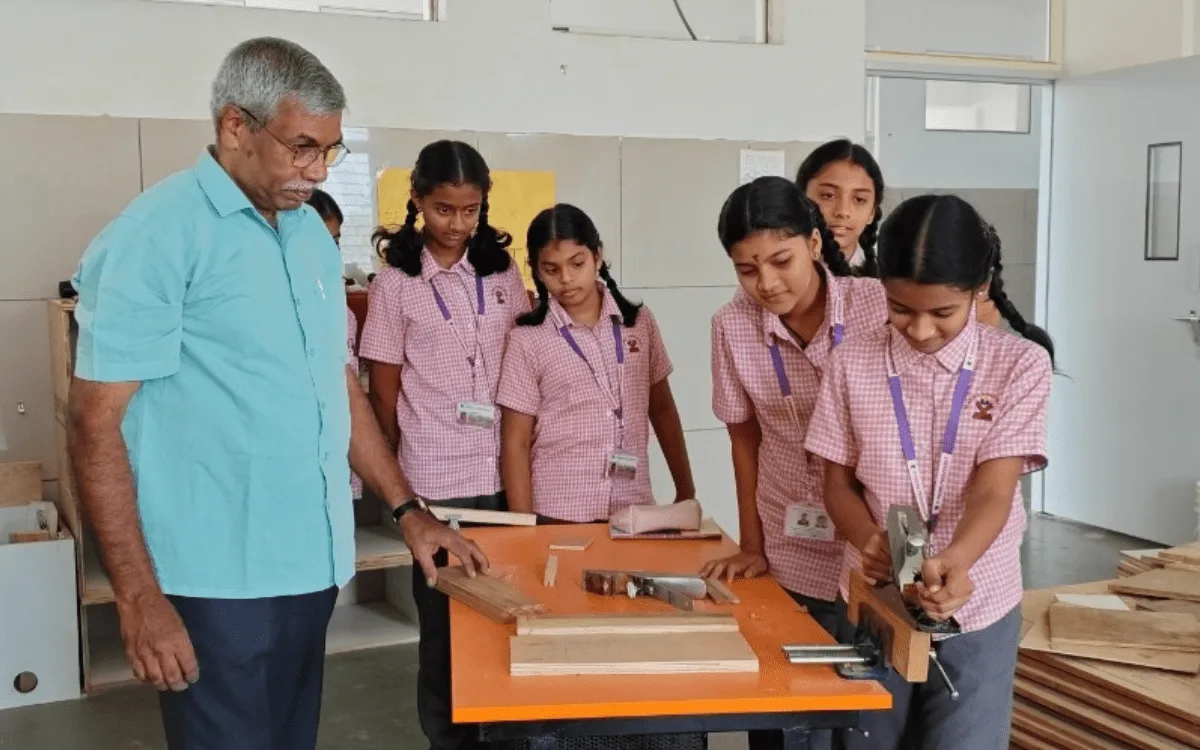
This can be group work, role-plays, presentations, experiments, or real situation-based problem solving. Such experiences assist teachers to observe how students interact, cooperate and manage responsibility. To a child, studying becomes more of a natural process and much more exciting than worksheets.
Life Skills Embedded Within the Curriculum
The skills that children acquire include thinking rationally, simple financial management, knowledge of environmental concern, online safety, and ethical decision-making. These skills, when evaluated together with academics, will make learning practical and relevant, a quality that children can actually apply outside the classroom.
Well-being and Mindfulness in Evaluations
Yoga, mindfulness, reflection time, and value-based conversations are practices that help children to slow down, concentrate and learn about their feelings more. By evaluations that reward work and progress, not only results, children will be more comfortable making attempts, failing, and getting better.

What Parents Need to Understand about the New Assessment System
- How engaged your child is in learning
- Whether they enjoy projects and discussions
- How they manage time and responsibilities
- Their confidence in expressing ideas
Choosing the Right School in a Changing Education Environment
The appropriate environment assists children in developing consistently, without being scared or continuously being compared.
A School's Role in Supporting Holistic Assessment
Schools like Vishwa Vidyapeeth School consciously align teaching and assessment with real learning experiences and strong values. Through its contemporary evaluation methods, Vishwa Vidyapeeth School aims to enable the students to grasp and master concepts profoundly, be responsible in their work, and develop with confidence.
It is this moderate approach that lots of families are seeking nowadays when thinking of the top schools in Bangalore- a place where they feel their learning is
meaningful, conducive and prepared for the future.
Conclusion
When assessments are used as tools for understanding rather than judgement, children don’t just perform better-they learn better. And that, ultimately, is what education should be about.