Author name: vish@k2025

Best Schools in Bangalore

From Gurukula Roots To Global Classrooms: Celebrating Fifteen Years Of Indian Values In Education

Best Schools in Bangalore From Gurukula Roots To Global Classrooms: Celebrating Fifteen Years Of Indian Values In Education An era when the values a child absorbs, the identity they carry and the confidence with which they wield it are as important as academic excellence. As Vishwa Vidyapeeth School reaches the milestone of its fifteenth year, let us pause to laud a path-breaking philosophy that has never asked parents to choose between imbibing Indian values and gearing the child for global standards. Because today, when it comes to the best 10 schools in Yelahanka, parents know that Vishwa Vidyapeeth has long been their choice for a truly holistic learning experience that beautifully bridges both aspects. Gurukula Traditions That Continue To Blossom At VVP The Gurukula system and traditions of yore have been an intrinsic part of India’s ancient learning system and were not confined to just academics. And today, at Vishwa Vidyapeeth School, these traditions continue to find resonance in the school’s day-to-day activities.Sanskrit is taught as a subject that opens the door to India’s vast repository of wisdom, not merely as another examination subject. Yoga is practised to build discipline and enhance focus, with tangible benefits for the body and mind. Gita recitations and value-based storytelling sessions are used to drive home age-old Indian values like gratitude, humility and self-discipline, making Indian culture and traditions accessible and relatable to young minds.These are just some examples of how VVP makes sure that the roots of Indian values run deep in a child even while they prepare the young ones for a globally competitive world. Making The Best Blend Of Global And Indian In Education What sets VVP apart is its ability to make the Indian and the global not two opposing concepts but complementary facets that enrich a child’s learning experience. The school provides exposure to diverse, global perspectives while ensuring that the students understand their Indian roots as assets that set them apart from their peers.While the VVP curriculum (that follows the ICSE, CBSE and IGCSE syllabi at its different campuses) prepares the students to face global challenges with confidence, the school ensures that the students derive strength from their Indian culture and values. Students who understand the value of Yoga, Indian stories and Indian philosophies are likely to be more balanced individuals with a stronger sense of self, better equipped to take on the world.It is this unique blend, in fact, that draws in parents seeking the best ICSE schools near me, who come to VVP knowing that they have chosen a path of holistic development for their child. Fifteen Years Of Nurturing Confident Global Citizens The cumulative effect of the school’s progressive and sensitive approach to education has resulted in students who are confident, balanced, and well-rounded. At VVP, students walk with an air of self assuredness that promotes their standing, whether on the classroom floor or the world stage. The results of VVP’s unique approach to education speak for themselves, from the community projects our young students get involved in to the students representing India at a global level.This is achieved through experiential, value-based learning that enables the students to not just acquire knowledge but to experience and live it. The innovative methodology of Gnanavatika makes learning interesting and engaging as it helps the students to observe, experience and interact with the concepts in practical ways. VVP applies these frameworks to gain deeper understanding of concepts, be it through stories from Indian epics or through hands-on experiments.It is this unique approach, and not just the infrastructure or rankings, that enables VVP to be one of the most sought-after schools in North Bangalore, known for its reputation as one of the best schools in Yelahanka. Best Schools In Bangalore With Signature Programmes For The Last Decade And A Half Vishwa Vidyapeeth School’s fifteen years of existence have seen the launch of numerous signature educational programs that have helped shape and mould students who are globally competitive while at the same time being grounded in their Indian values. The various initiatives launched at VVP – Dasha Prabodha, Mother on Duty, Save Water Live Better and VVPMUN – are all indicative of the school’s commitment to experiential learning that prioritises Indian values based on Indian philosophy.And that is the ethos that has, over the past decade and a half, helped the school carve a niche for itself as one of the best schools in Bangalore for holistic development. Why A Balanced Approach To Education Matters In an increasingly digital world where students are more exposed to external influences than ever before, schools have the responsibility to ground students in their cultural roots even as they prepare them for the global arena, making such an approach all the more pertinent now. Children who understand their origins as well as their goals in life are likely to be balanced individuals with a strong sense of self and a clear sense of direction. These qualities, in turn, enable them to adjust better to new experiences and to face challenges with confidence.That is why, as more and more parents in Bangalore realise the importance of such a balanced, holistic approach to education, they are choosing VVP as their child’s education destination. At Vishwa Vidyapeeth School, students learn to embrace their Indian identity without being insular and to engage with global perspectives without losing sight of their roots. As such, the school is ideally positioned to be their choice whenever they look for places in the best schools in Bangalore list. A Legacy Of Excellence And Commitment As Vishwa Vidyapeeth School celebrates fifteen years of providing quality education to countless students, the school looks forward to many more years of continued growth and development. In its fifteen years, the school has built a legacy of excellence and commitment to its philosophy of preparing students for the world without taking away their grounding in Indian values.The legacy of Vishwa Vidyapeeth School, therefore, is one that parents can be confident in when looking for the best

Aerial views of a large school campus with academic buildings, sports grounds, and green surroundings.
Best Schools in Bangalore

CBSE vs ICSE vs IGCSE: Which Curriculum Fits Your Child Best in North Bangalore?

Best Schools in Bangalore CBSE vs ICSE vs IGCSE: Which Curriculum Fits Your Child Best in North Bangalore? In a contemporary setting, choosing the academic board has become as crucial as selecting the right institute itself. Be it CBSE, ICSE, or IGCSE, every parent is at a crossroads while comparing them; however, the facts and differences between them are not known. It is therefore essential for the parents to understand these differences to make their choice in this admission season. CBSE, or the Central Board Of Secondary Education, follows the prescribed norms of NCERT. When it comes to academics, it is a known fact that most competitive exams at the higher secondary and undergraduate levels across the country require one to have a firm grasp of science and math. CBSE, or the Central Board of Secondary Education, follows the prescribed norms of NCERT. For parents exploring CBSE schools near me in North Bangalore, understanding the board’s academic approach can help in making an informed choice. A most suitable option for kids who aspire to take such exams in their academic career. Also, since this board mainly focuses on examinations with a well-defined syllabus, the evaluations become predictable and hence, easy to prepare for. Another prominent plus point of this board is its well-structured curriculum, which remains the same across most of the states in the country, thus making it convenient for families that may have to relocate. Parents searching for ICSE schools near me in North Bangalore can consider this curriculum for its strong emphasis on language, analytical thinking, and holistic development. ​ICSE, or Indian Certificate of Secondary Education, is followed by the Council for the Indian School Certificate Examinations. ​This board mostly concentrates on building a strong foundation and a well-rounded personality for a child. Compared to other boards, a comparatively higher importance is given to English, and the syllabus covers a vast range of subjects, right from arts to environmental science. ICSE also has descriptive exams with application-based questions, and it expects the child to develop a habit of analytical thinking and reading from an early age. ​For Parents Who Wish To Give Their Kids An Exposure To Global Education, The IGCSE Curriculum Would Be Most Appropriate When searching for IGCSE schools near me in North Bangalore, understanding the curriculum’s approach to learning is an important first step. ​The IGCSE syllabus, by Cambridge Assessment International Education, focuses on developing skills and concepts with an emphasis on core subjects. This board mostly follows a competency-based approach instead of the rote system of learning. Since the curriculum promotes research, projects, and case studies apart from theoretical and practical examinations, the students get an opportunity to prove their skills and knowledge both theoretically and practically. Comparison Between The Skill Sets Required For The Boards Even though each board aims to create skilled and competent students, it is essential to understand the differences between them. For instance, whereas the CBSE syllabus helps one build concepts in core subjects, the ICSE course helps kids become better English language speakers and develops analytical skills. On the other hand, the IGCSE curriculum lays emphasis on researching, understanding, and demonstrating concepts. No specific board can, therefore, be considered better than the other. It is mostly the child’s preference, along with his or her learning pattern, that can determine which board is more suited for them. ​Understanding The Differences Between The Evaluation Patterns Of The Boards ​Most parents consider only the subjects while choosing between the various academic boards. However, it is essential to understand the examination patterns they follow as well. For instance, compared to others, the CBSE board has a more predictable pattern. The ICSE board, on the other hand, has descriptive-type examinations. The IGCSE curriculum combines projects and examinations. Parents, therefore, must understand their child’s strengths and weaknesses before making their choice, instead of basing it only on the popularity of a particular board. How VVP Helps In Delivering The Same Quality Of Education Across All Three Boards When it comes to Vishwa Vidyapeeth School, all three boards are delivered with the same amount of commitment and enthusiasm to ensure academic excellence among the students. Apart from being a premier academic institution, we also follow a value-based education system, along with Gnanavatika, to ensure all-round development of the young minds. Thus, during the crucial admission time, parents can completely rely on us to deliver quality and holistic education, without any compromise on either front. It is the same infrastructure and extracurricular activities that we offer across all three boards, along with the same amount of mentorship that helps students shine brightly in academics as well as other areas of interest. Which Academic Board Is Most Suited For Your Child? It is often difficult to understand which academic board would be most suitable for one’s child, since there is no hard and fast rule that can apply universally across all sections. A child who is comfortable with theoretical studies and wants to pursue higher studies after 10th standard would find CBSE to be a better option. On the other hand, a student who finds it difficult to cope with a rote system of studies and wishes to be part of a more practical, analytical, and descriptive learning methodology would prefer to be with ICSE. Similarly, a kid who is aiming to study abroad at a later stage and wishes to gain more exposure to research, projects, and case studies would choose IGCSE over the others. It is important to consider the child’s learning style, future goals, and the overall facilities offered by schools in North Bangalore. Thus, while choosing an academic board for their child, it is crucial for parents to keep in mind the overall infrastructure and facilities offered by the school, instead of blindly following the preference of a majority.

Best Schools in Bangalore

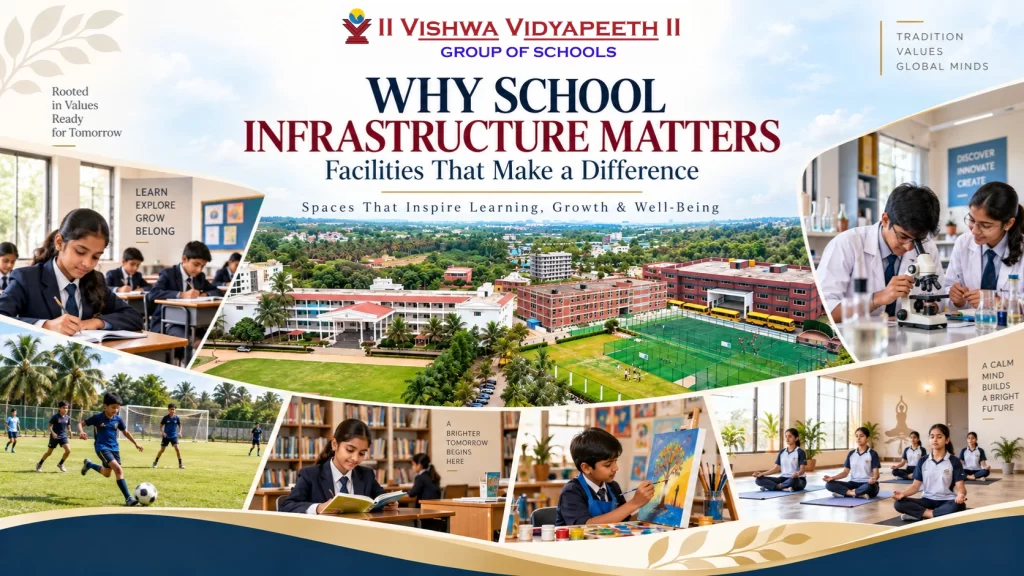
Why School Infrastructure Matters: Facilities That Make a Difference

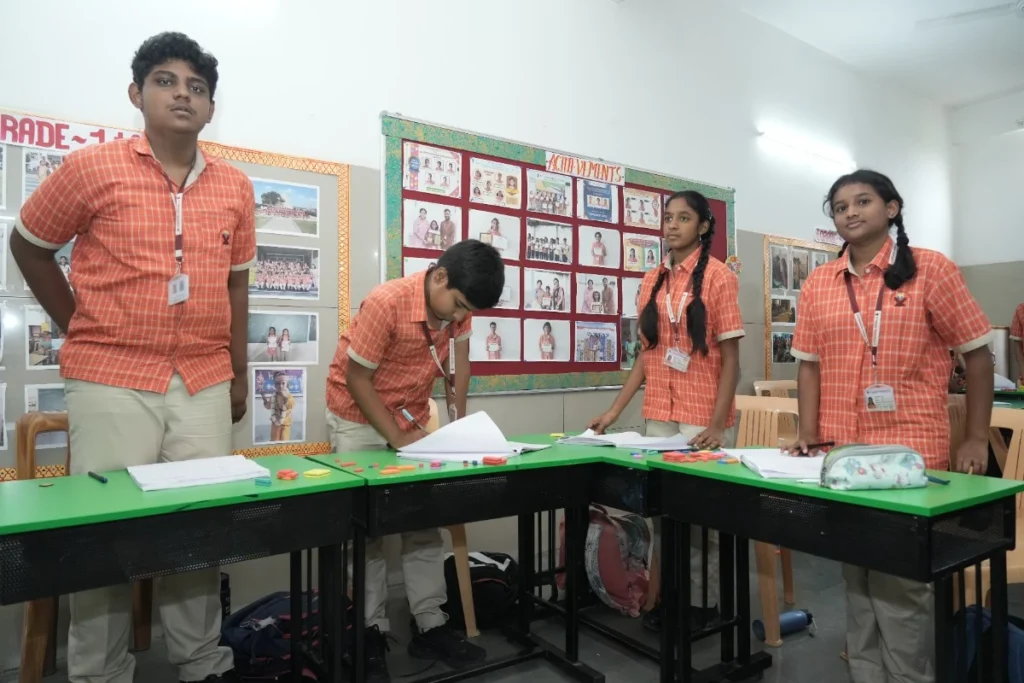
Best Schools in Bangalore Why School Infrastructure Matters: Facilities That Make a Difference In the modern dynamic society, a school is no longer marked by its syllabus or exam score alone. The physical surroundings where children are educated are vital in the development of their academic performance, emotional health, life skills and values. Well-considered school facilities aid in holistic development, promote active learning, decrease unnecessary dependence on screens, and provide meaningful ways for students to become self-assured, responsible adults. That is why parents are increasingly considering facilities that go beyond textbooks in selecting the top 10 schools in Bangalore. Secure, Student-Friendly Campuses That Promote Learning Effective education depends on a well-planned campus. Large, natural light classrooms with good ventilation and comfortable seating aid the students to remain focused and comfortable during the day. Distinct walkways, age-specific toilets, medical rooms, and security measures ensure the perception of security, and children are left with the ability to concentrate on learning. Children become more receptive to exploration, cooperation, and creativity when they feel safe and appreciated in their physical space. Child-friendly infrastructure also promotes inclusivity since every learner will feel welcome and supported regardless of their abilities. Classrooms That Encourage Experiential Learning Contemporary classrooms are much more than four walls and a blackboard. Flexible seating, smart storage, display boards, and interactive learning corners make it possible to engage in hands-on activities, group discussions, role-plays, and presentations. These spaces promote experiential learning where students learn through doing as opposed to passively learning through screens. Experience learning centres enable the students to acquire teamwork, communication skills, problem-solving, and decision-making confidence. This method is closely related to education based on life skills and minimises the excessive use of digital devices, making the process of studying exciting, active, and valuable. Infrastructure Supporting Value-Based Education The silent and yet effective role of shaping values is also played by school infrastructure. Schools use assembly halls, open spaces, and discussion areas to host daily assemblies, storytelling, moral discussions, and reflection. Such social places contribute to instilling discipline, empathy, gratitude, respect, and social responsibility. Quiet reflection spaces, value circles, or mindfulness practice strengthen emotional health and self-knowledge. Value-based education becomes an experience instead of a lesson when the physical environment facilitates such practices. Co-Curricular Facilities To develop life skills Arts, sports, theatre, robotics, music and oratory facilities are necessary to foster confidence and leadership. Proper sports grounds, indoor courts, art studios, auditoriums, and innovation labs will enable the children to explore their interests and abilities outside academics. The engagement in clubs, events, and co-curricular programmes can assist students in managing time, collaborating, becoming creative, and building resilience. These experiences educate the children on how to manage success and failure with dignity and how to develop social skills that they may cherish throughout their lives. Areas that promote Social Responsibility Schools are significant in creating socially conscious citizens. Students are taught to be responsible when campuses have gardens, composting areas, activity zones, and spaces where the community can engage in activities. Food drives, environmental campaigns, charity events, service learning programmes etc., are more effective when children can be a part of these things and not merely be told about them. Such experiences create compassion, civic consciousness and better awareness of the world outside the classroom. The infrastructure that promotes such initiatives transforms values into experiences. Curriculum-Based Learning Environments School facilities are effective in integrating curriculum by providing specialised facilities like science laboratories, math corners, language laboratories and life-skills rooms. These settings enable the students to learn critical thinking, simple financial literacy, environmental consciousness, digital etiquette and personal safety skills practically. Learning is contextual and relevant when students can relate concepts to real life. The infrastructure that facilitates this integration enables children to develop into independent minds that are ready to face future challenges. Mindfulness and Emotional Well-Being Zones Academic success is not as important as emotional health. Specialised yoga studios, meditation rooms and reflective spaces enable students to relax, handle stress and develop emotional stability. The facilities assist in mindfulness processes that enable children to gain knowledge of their feelings, build attention, and create internal balance. This is especially important in an era of continuous digital interaction, where these serene environments can alleviate screen fatigue and improve mental health. Thoughtful Infrastructure for Early Years To young learners, infrastructure should be accommodating, secure, and challenging. The early childhood development requires colourful classrooms, sensory play areas, outdoor play areas, and storytelling corners. Such factors as play, learning, and emotional security are the elements that parents of Preprimary schools in Bangalore seek in the environment. These spaces foster the children to develop the basics of life, social self-esteem and curiosity but restrict excessive screen time over a vital developmental period. A Holistic Vision in Practice Infrastructure is strategically matched with an integrated vision of education at places of learning such as Vishwa Vidyapeeth School. Learning spaces are intended to assist experiential learning frameworks like Gnanavatika, where children consider ideas by observing, interacting, and applying these ideas practically. Starting with well-furnished classrooms to the open learning areas, all facilities serve to raise independent and value-based learners. Vishwa Vidyapeeth School, with its incorporation of academics, life skills, mindfulness, and social responsibility, in a safe physical environment, represents how the proper infrastructure can indeed matter in the task of making a whole person. Conclusion School infrastructure is not simply buildings and facilities, but rather a dynamic collaborator in the learning process of a child. It can promote experiential learning, minimize screen time, cultivate emotional health, and develop valuable life skills when created with intentionality. Values, leadership, creativity and community engagement facilities equip students not only to pass exams, but also to live. Selecting a school with careful infrastructure is then the selection of a place where children will feel safe, inspired and empowered to develop into competent, caring, and confident individuals.

Best Schools in Bangalore

Understanding the New Assessment Patterns in CBSE & ICSE Schools

Best Schools in Bangalore Understanding The New Assessment Patterns In CBSE & ICSE Schools The term assessment can evoke the same old memories when it comes to most parents, textbooks scattered on the table, last-minute cramming and the anxiety of receiving report cards. However, when you have a school child nowadays,you must have observed that tests no longer appear the same. And that is not a bad thing, honest. CBSE and ICSE schools have been gradually reconsidering the assessment of children. There are still marks, but they do not reveal the entire story anymore. Today’s assessment patterns are trying to understand how a child learns, not just how much a child remembers. For parents, knowing what’s changed-and why-can help make sense of report cards that look very different from what we grew up with. Why Is the Pattern of Assessment Changing? The kind of world our children are currently living in is not even similar to the kind of world we trained them to know by rote learning. Information is everywhere. The only thing that is relevant at this point is that a child is able to interpret it, doubt it and apply it prudently. Traditional exams rewarded memorisation. But memorising alone doesn’t teach a child how to solve problems, work with others, or make decisions. Education boards have recognised this gap. The shift in assessment patterns is an attempt to bridge it-by focusing on learning as a process, not a one-day performance. The New CBSE Assessment Framework Explained CBSE’s assessment changes are built around one clear idea: understanding matters more than recall. This is why many parents notice that exam papers look different today. What Parents Are Seeing in CBSE Assessments Questions that ask children to apply concepts instead of repeating definitions Regular class-based assessments through worksheets, short tests, and projects Reduced pressure on the final exam, since performance across the year is considered Learning that naturally builds reasoning, awareness, and responsibility In the case of students, it will result in fewer surprises and more chances to demonstrate what they know in reality. To parents, it will be an ordeal of time, at least not only in March. Understanding ICSE’s Holistic Assessment Model ICSE has always focused on depth of learning, especially in language and conceptual clarity. The newer assessment approach continues this tradition, but with more room for creativity and real-world application. How ICSE Evaluates Students Today Learning is assessed throughout the year, not only at exam time Assignments and projects are given real importance Answers are expected to show reasoning, not memorised lines Participation in extracurricular activities is perceived as growth. ICSE examinations tend to favour students who are creative thinkers andthose who are articulate, as opposed to those who merely memorise. Experiential Learning as a Major Assessment Tool Among the more visible shifts in the two boards, the extent to which learning occurs through action is one of them. Children are not judged based on written answers, but through experiences. This can be group work, role-plays, presentations, experiments, or real situation-based problem solving. Such experiences assist teachers to observe how students interact, cooperate and manage responsibility. To a child, studying becomes more of a natural process and much more exciting than worksheets. Life Skills Embedded Within the Curriculum Today’s assessments don’t treat life skills as “extra” anymore. They have been seamlessly incorporated into daily education. The skills that children acquire include thinking rationally, simple financial management, knowledge of environmental concern, online safety, and ethical decision-making. These skills, when evaluated together with academics, will make learning practical and relevant, a quality that children can actually apply outside the classroom. Well-being and Mindfulness in Evaluations Emphasis on emotional well-being is another significant shift that parents can observe. Schools are becoming more conscious that learning can be blocked by stress and pressure. Yoga, mindfulness, reflection time, and value-based conversations are practices that help children to slow down, concentrate and learn about their feelings more. By evaluations that reward work and progress, not only results, children will be more comfortable making attempts, failing, and getting better. What Parents Need to Understand about the New Assessment System This shift also asks parents to look at learning differently. Instead of focusing only on marks, it helps to notice: How engaged your child is in learning Whether they enjoy projects and discussions How they manage time and responsibilities Their confidence in expressing ideas Promoting curiosity, balance, and consistency in the home helps schools in what they are attempting to accomplish by these new forms of assessment. Choosing the Right School in a Changing Education Environment With the changing assessment, a lot or parents who seek the Best schools in Bangalore are now more focused on teaching strategles and assess procedures. The way a school handles assessment usually tells a lot about its interest in the overall development of a child, not only achievements in academic scores. The appropriate environment assists children in developing consistently, without being scared or continuously being compared. A School’s Role in Supporting Holistic Assessment Schools like Vishwa Vidyapeeth School consciously align teaching and assessment with real learning experiences and strong values. Through its contemporary evaluation methods, Vishwa Vidyapeeth School aims to enable the students to grasp and master concepts profoundly, be responsible in their work, and develop with confidence. It is this moderate approach that lots of families are seeking nowadays when thinking of the top schools in Bangalore- a place where they feel their learning is meaningful, conducive and prepared for the future. Conclusion The new patterns of assessment in CBSE and ICSE schools are a very much-needed change of approach to education. These systems provide children with time to think, experiment and develop by not being bound to rote memorisation and the exam pressure. When assessments are used as tools for understanding rather than judgement, children don’t just perform better-they learn better. And that, ultimately, is what education should be about.

Best Schools in Bangalore

How Parents Can Reduce Screen Time for Their Children

Best Schools in Bangalore Why Experiential Learning Matters In Today’s Classrooms In a fast-changing world shaped by technology, constant information flow, and evolving social dynamics, education can no longer be limited to textbooks and examinations alone. Today’s students need more than academic knowledge; they require life skills, emotional intelligence, adaptability, and a strong value system. This is where experiential learning emerges as a powerful and essential approach in modern classrooms-one that is already shaping learning environments in schools committed to holistic, child-centric education like Vishwa Vidyapeeth School. At its core, experiential learning is about learning by doing. It places students at the heart of the learning process, encouraging them to explore, experiment, reflect, and apply concepts in real-life contexts. More importantly, it helps children grow into confident, responsible, and well-rounded individuals while reducing excessive screen time and promoting meaningful engagement. Understanding the Impact of Excessive Screen Time With increasing concerns among parents and educators about rising screen exposure, experiential learning offers a healthy and purposeful alternative. Instead of passively consuming information through digital devices, students actively participate in hands-on activities, discussions, collaborative projects, and real-world problem-solving. Whether it is conducting science experiments, working in teams, engaging in creative arts, or participating in sports, experiential learning keeps children mentally and physically involved. Such experiences ignite curiosity, improve focus, and nurture a genuine love for learning-without over-reliance on screens. Through continuous interaction with peers and teachers, students naturally develop communication skills, teamwork, and self-confidence. Replacing Screens with Experiential Learning Activities One of the most valuable outcomes of experiential learning is the early development of essential life skills. Activities such as role-plays, debates, presentations, group projects, and simulations allow students to practise decision-making, critical thinking, and problem-solving in a supportive environment. Collaborative tasks teach children how to listen, express ideas, manage disagreements, and work towards shared goals. These experiences closely mirror real-life situations, equipping students to face future academic, professional, and personal challenges with resilience and confidence. This approach is a hallmark of progressive institutions, including the Best CBSE School Yelahanka, where experiential learning is thoughtfully woven into everyday classroom practices to support overall development alongside academic excellence. Instilling Values Through Daily Family Practices Values such as empathy, respect, gratitude, discipline, and responsibility cannot simply be taught they must be experienced. Experiential learning provides meaningful contexts in which these values are lived and understood. Through daily assemblies, storytelling sessions, classroom discussions, and reflective practices, students are encouraged to think deeply about ethical choices and human values. When children actively participate in activities that emphasise cooperation, fairness, and accountability, these values naturally become part of their behaviour rather than abstract concepts to memorise. By integrating moral education into daily experiences, schools help students develop strong character and emotional maturity-qualities essential for navigating both personal and social relationships. Encouraging Participation in Clubs, Sports, and Creative Activities Beyond the classroom, clubs, events, and co-curricular programmes serve as powerful platforms for experiential learning. Participation in arts, sports, robotics, theatre, public speaking, and cultural activities allows students to explore their interests while building confidence and creativity. These experiences foster leadership, time management, teamwork, and perseverance. Events and club activities also encourage students to step out of their comfort zones, express themselves freely, and discover their individual strengths in a supportive environment. Teaching Social Responsibility and Community Engagement Education remains incomplete without a sense of social responsibility. Experiential learning connects students to the world beyond school through community engagement and service-learning initiatives. Activities such as environmental drives, charity programmes, awareness campaigns, and food donation initiatives like Annadata Sukhibhava help students understand societal needs and their role as responsible citizens. By participating actively, children develop compassion, gratitude, and a strong civic sense.These experiences reinforce the idea that learning extends beyond classrooms and that even small actions can create meaningful change in society. Integrating Life Skills into Everyday Learning One of the strengths of experiential learning is how seamlessly it integrates with the curriculum. Subjects are designed not only to deliver academic knowledge but also to cultivate practical life skills. Inquiry-based learning strengthens critical thinking, while hands-on activities introduce basic financial literacy and environmental awareness. Guided discussions around digital etiquette and safety help students navigate the modern world responsibly. This integrated approach makes learning relevant, practical, and aligned with real-life needs. Supporting Mindfulness and Emotional Well-being In today’s high-pressure environment, emotional well-being is as important as academic achievement. Experiential learning incorporates mindfulnesspractices such as yoga, meditation, value circles, and reflective sessions to support students’ mental and emotional health. These practices help children manage stress, improve concentration, and develop self-awareness. As students learn to recognise and regulate their emotions, they become more empathetic, resilient, and emotionally balanced-skills that serve them throughout life. Providing Leadership Opportunities at Home and School Leadership is best learned through experience rather than instruction. Experiential learning offers students opportunities to take on real responsibilities through student councils, Model United Nations, classroom roles, and event management. By organising activities, representing peers, and making decisions, students learn accountability, teamwork, and ethical leadership. These experiences build confidence and prepare them to take initiative both within and beyond the academic setting. Such leadership-driven learning is a defining feature of progressive institutions like the CBSE schools Bangalore North, where experiential education shapes globally aware and socially responsible learners. Experiential Learning Done the Right Way For experiential learning to be truly effective, it must be purposeful and thoughtfully implemented. Age-appropriate, reflective, and goal-oriented experiences-such as those inspired by Gnanavatika-style leaming-ensure long-term impact. This approach ensures that students are not merely participating in activities, but actively thinking, reflecting, and applying what they learn. The result is confident, curious, compassionate learners who are well-equipped for life beyond school. Conclusion Today, experiential learning is more relevant than ever. It transforms classrooms into spaces of discovery, reduces unhealthy screen dependency, and nurtures essential academic and life skills. By grounding education in real-world experiences, values, emotional well-being, and leadership, experiential learning prepares students not just for exams-but for life itself. By embracing this approach, schools are shaping thoughtful

Best Schools in Bangalore

Why Experiential Learning Matters in Today’s Classrooms

Best Schools in Bangalore Why Experiential Learning Matters In Today’s Classrooms In today’s fast-changing world, education cannot remain limited to textbooks and exams. With technology shaping daily life, information coming at us constantly, and social realities evolving, children need far more than academic knowledge alone. They need life skills, emotional understanding, adaptability, and a strong value system. This is why experiential learning has become so relevant in modern classrooms, particularly in schools that follow a holistic, child-focused approach like Vishwa Vidyapeeth School. At its core, experiential learning is about learning by doing. It gives students the space to explore ideas, try things out, make sense of their experiences, and apply what they learn to real-life situations. Over time, this approach helps children grow into confident, responsible, and well-rounded individuals. An added benefit is that it naturally reduces over-dependence on screens and replaces it with meaningful engagement. Moving Beyond Screens to Meaningful Learning Experiences With screen time becoming a growing concern for many parents and educators, experiential learning offers a much-needed balance. Instead of passively consuming content on digital devices, students are encouraged to participate actively through hands-on activities, discussions, group work, and real-world problem-solving. Whether it’s a science experiment, a group assignment, or time spent in creative arts and sports, children stay involved and interested. These experiences spark curiosity and improve focus. Learning feels enjoyable rather than forced. As students interact more with their peers and teachers in such environments, communication skills, teamwork, and confidence begin to develop naturally. Experiential Learning Activities That Build Essential Life Skills One of the most valuable aspects of experiential learning is how early it begins to build life skills. Activities like role-plays, debates, presentations, group projects, and simulations allow students to practise decision-making critical thinking, and problem-solving in a safe and supportive setting. Working together on shared tasks teaches children how to listen, express ideas, handle disagreements, and work towards common goals. These are skills they will need throughout life. Because these experiences closely reflect real-life situations, students feel better prepared to face future academic, professional, and personal challenges with confidence. This kind of learning environment is often seen in progressive institutions such as the Best CBSE School Yelahanka, where experiential approaches are woven thoughtfully into daily classroom practice alongside academic learning. Value-Based Education Through Real-Life Contexts Values cannot be taught through instructions alone. They are learned through everyday experiences. Experiential learning plays a key role in helping children understand values like empathy, respect, gratitude, discipline, and responsibility. Simple practices such as daily assemblies, storytelling, classroom discussions, and reflection sessions encourage students to think about ethical choices and human values. When children regularly participate in activities that involve cooperation, fairness, and accountability, these values gradually become an integral part of who they are-not just ideas they recall for a lesson. By embedding value-based learning into daily school life, students develop strong character and emotional maturity, which supports healthy relationships both in and beyond school. Clubs, Events, and Co-curricular Programmes as Learning Platforms Some of the most meaningful learning happens outside textbooks. Clubs, events, and co-curricular programmes offer rich opportunities for experiential learning. Whether it is arts, sports, theatre, cultural activities, or student clubs, these platforms allow children to explore interests and discover their strengths. Through participation, students learn confidence, discipline, creativity, and time management. They also experience teamwork, responsibility, and the joy of contributing to something larger than themselves. These lessons often stay with them long after school years are over. Social Responsibility and Community Engagement Education feels complete only when students understand their connection to the world around them. Experiential learning helps build this awareness through community engagement and service-learning initiatives. Activities such as environmental drives, charity programmes, food donation Initiatives like Annadata Sukhibhava, and awareness campaigns expose students to real social needs. When children participate actively, they begin to understand compassion, civic responsibility, and gratitude in a very real way. Such experiences remind students that learning does not stop at classroom doors and that even small actions can make a meaningful difference. Mindfulness and Emotional Well-being by Experiential Practices In today’s busy environment, emotional well-being is just as important as academic success. Experiential learning supports this through practices such as yoga, meditation, value circles, and reflection sessions. These activities help children slow down, manage stress, and become more aware of their emotions. Over time, students learn to regulate their feelings, build resilience, and develop empathy-skills that are essential not just in school, but throughout life. Leadership Development Through Real Responsibilities Leadership cannot be learned only through theory. It needs to be experienced. Experiential learning creates opportunities for students to take responsibility through student councils, Model United Nations, classroom roles, and event organisation. Planning activities, representing peers, and making decisions help students develop accountability, organisation, teamwork, and ethical leadership. These experiences build quiet confidence and prepare students to take initiative both in school and later in life. This approach is commonly seen in progressive institutions like the best IGCSE school Bangalore, where experiential learning plavs a central role in shaping globally aware and responsible learners. Experiential Learning the Right Way: A Holistic Approach Experiential learning works best when it is applied thoughtfully and consistently. When learning experiences are age-appropriate, reflective, and goal-oriented-as seen in Gnanavatika-style learning-the impact is long-lasting. Students are not just doing activities for the sake of it. They are thinking, reflecting, and applying what they learn. Over time, this creates learners who are confident, curious, compassionate, and capable. Conclusion Experiential learning matters today more than ever. It transforms classrooms into spaces where curiosity is encouraged, screen dependence is reduced, and essential life skills are developed alongside academics. By focusing on real-world experiences, values, emotional well-being, and leadership, experiential learning prepares children not just for exams, but for life. Schools that embrace this approach are nurturing thoughtful individuals, responsible citizens, and lifelong learners an educational philosophy clearly reflected in the learning journey at Vishwa Vidyapeeth School.

Teacher engaging young students seated in a circle during an interactive classroom activity.
Best Schools in Bangalore

How to Identify and Support Your Child’s Unique Learning Style

Best Schools in Bangalore Understanding The New Assessment Patterns In CBSE & ICSE Schools It is not the board. It is the child. Schools guide, teachers inspire, and boards shape the path. True learning, however, begins when you pause to notice how your child learns. Before exploring the best IGCSE schools in Bangalore or planning visits to CBSE and ICSE campuses, take a moment to ask yourself a simple question. What helps my child feel understood and excited to learn? At Vishwa Vidyapeeth, we believe that question shapes everything that happens in the classroom. Whether your child studies under CBSE, ICSE, or IGCSE, our teaching begins with understanding their curiosity, rhythm, and individuality. Learning Styles Are Not Labels For years, parents were told that children are visual, auditory, or kinesthetic learners. Modern education, however, recognises that learning is far more fluid. Research and the Universal Design for Learning framework show that children learn best when they experience information in many ways such as reading, moving, creating, listening, or performing.. The new reforms introduced in top CBSE schools in Bangalore follow the same idea. Competency-based learning, art integration, and project assessment have replaced rigid patterns. Instead of asking which category your child fits into, ask which experiences keep them curious. The answer is usually a blend of many. How To Notice Your Child’s Learning Rhythm Children constantly show us how they learn; we just need to listen differently. The doodler isn’t distracted they’re mapping ideas visually. The chatterbox explaining every thought is rehearsing understanding aloud. The restless builder learns through movement and touch. Try a one-week “learning observation.” Offer the same concept in two ways -short video and a hands-on activity and watch what they remember best. Then, instead of correcting their approach, build on it. That recognition alone can boost confidence and cooperation overnight. Once you understand how your child absorbs information, the next step is to choose a learning environment that builds on those strengths. Choosing The Environment That Fits Your Child Every curriculum has its own pace and personality. Understanding these differences helps you choose an environment that matches your child’s temperament. ICSE encourages depth and creativity. It suits children who enjoy reading, research, and detailed expression. Many parents explore top ICSE schools in bangalore when they notice their child loves analysing and imagining. IGCSE promotes inquiry and reflection. It supports learners who connect ideas across subjects and enjoy discovering how and why things work. CBSE has evolved from its earlier structure. The 2025 and 2026 changes promote skill application and art integration, making it ideal for children who enjoy order but also need freedom to explore. At Vishwa Vidyapeeth, we bring these three boards together within one shared philosophy. Our goal is not uniform success but individual growth. What A Child-First Classroom Looks Like Walk through our classrooms and you will notice something rare, a calm energy that fills the space. Lessons begin with a few minutes of yoga or deep breathing. In English, stories turn into plays; in Science, concepts turn into experiments. Even moral science is experiential, often inspired by the Bhagavad Gita. This ecosystem works because it’s backed by structure: The Neural Learning Framework trains teachers to align lessons with how the brain learns and recalls. Our small class sizes allow mentors to adapt pace and feedback for each student. Sanskrit and yoga sharpen focus, while our in-house dining reinforces nutrition and discipline. Value education sessions nurture empathy and reflection key parts of real-world intelligence. Learning here isn’t hurried or one-dimensional; it’s rhythmic, responsive, and deeply human. Parents As Partners In Learning We believe that a child learns best when school and home move in sync. Our Parent Engagement Programme (PEP) brings families directly into this rhythm.Through interactive workshops, Coffee Mornings, and volunteering opportunities, parents become co-learners rather than spectators. PEP sessions cover everything from raising a confident child and building a growth mindset to managing behaviour and emotions. Parents can: Participate in Sahayoga, where parents assist teachers or lead short activities, seeing their child’s learning style unfold in real time. Volunteer at events or sports meets, reinforcing teamwork and community. Mirror our school practices at home, such as a short mindfulness break before homework, consistent meal times, or turning lessons into small projects. Use our Coffee Mornings to exchange experiences with other parents, building confidence through conversation. When home and school reflect each other, learning becomes a shared rhythm, not a checklist. Every child learns in their own way, and that difference is what makes them special. Lists and comparisons seldom show how deeply a school understands each learner or how it helps them grow with confidence. Recognised among the top 5 best schools in Bangalore, we at Vishwa Vidyapeeth take pride in our child-first approach. Across our CBSE, ICSE, and IGCSE programs, education begins with empathy. Our Neural Learning Framework, value-based teaching, and Parent Engagement Programme ensure that every child is seen, heard, and supported in ways that reflect their individuality. Great education is not about choosing the perfect board. It is about helping your child discover their own way to learn and to love learning for life.

Aerial views of a large school campus with academic buildings, sports grounds, and green surroundings.
Best Schools in Bangalore

What Makes a School ‘The Best’? Key Factors to Consider

Best Schools in Bangalore What Makes A School ‘The Best’? Key Factors To Consider “Best” means different things to different people. For some, it’s academic scores; for others, it’s wellbeing or exposure. Lists like the top 10 schools in Bangalore can help parents begin the search but finding the right school depends on how learning feels inside the classroom, how it extends beyond it, and how consistently the systems behind it work. At Vishwa Vidyapeeth (VVP), we don’t treat “best” as a label. We see it as a living rhythm the way every teacher, lesson, and experience helps children understand life, not just lessons. Defining “Best” in 2025 Education in 2025 has evolved far beyond textbooks. Children are digital natives who crave human connection. Parents want measurable progress but not pressure. The top CBSE schools in Bangalore are now expected to balance rigour with readiness, while ICSE and IGCSE programs in Bangalore are exploring global perspectives that strengthen local learning. At VVP, personalisation drives everything. Continuous assessments, small-group mentoring, and reflection journals help teachers understand how each child learns. Projects are designed as learning journeys, not assignments-linking classroom theory to real-world problem solving. The 10 Factors That Actually Make a School The Best Experiential Learning Through Back to Gurukula (Gnanavatika)When classrooms open into the world, learning becomes real. VVP’s Gnanavatika journeys take students across India from Leh-Ladakh to Madhya Pradesh where they study geography on the ground, connect history with heritage, and apply science to sustainability. Each journey is assessed through journals and presentations, making fieldwork part of academics. Life Skills by Design: Dasha PrabodhaValues need practice. Through Dasha Prabodha, every child learns ten life skills by the age of ten communication, empathy, adaptability, and more. These are woven into the timetable through hands-on tasks and group reflections, helping values become habits. Assessment That Builds LearningInstead of chasing marks, VVP focuses on growth. Rubrics, reflections, and personalised feedback tell students how to improve, not just what they scored. This helps parents and teachers work together to support meaningful progress. The Teacher-Learner-Parent TriangleStrong education is an equal triangle. At VVP, teachers, learners, and parents stay connected through structured updates, portfolio reviews, and counselling meetings. This ensures the same clarity and encouragement continue at home. Projects That Travel Beyond CardboardScience fairs here aren’t about glitter charts. Students design prototypes, build working models, and present real solutions. Whether it’s robotics, community mapping, or environmental research, projects teach research, teamwork, and presentation the skills that define modern learning. Many evolve into community projects showcased in annual Gnanavatika exhibitions, linking innovation with impact. Wellbeing in the TimetableCounsellor-led sessions and Value Education periods under Dasha Prabodha give children space to reflect, manage emotions, and build empathy a scheduled approach to emotional balance. Safety That’s Taught, Not AssumedCCTV surveillance, trained escorts, and supervised transport are standard. But at VVP, students also learn why safety matters from road etiquette to digital responsibility turning protection into awareness. Time That Respects FamiliesPredictable routines and efficient logistics make daily life smoother. Buses run on time, classes stay structured, and communication is transparent. For many Yelahanka parents, this reliability is what makes VVP one of thebest schools in Yelahanka Bangalore. Culture, Service, and National ContextPatriotism is practised here, not preached. From Kargil Vijay Diwas reflections to community drives, children see how gratitude and service shape identity. They learn that being Indian is about both heritage and contribution. Evidence You Can SeeGrowth is visible. Portfolios, digital journals, and newsletters show what students build and how they evolve. Parents don’t have to guess – they can see learning unfold, step by step. The Board Decision, Simplified Many families start by choosing a board CBSE, ICSE, or IGCSE-but at VVP, the choice begins with the child. CBSE: Builds conceptual clarity through mapped learning, Olympiad preparation, and coding practice ideal for analytical thinkers seeking structured progression amoung the CBSE School In Bangalore. ICSE: Encourages language depth, creativity, and project-based understanding. Learners aligned with ICSE schools in Bangalore 2025-26 enjoy writing, debating, and connecting subjects across disciplines. IGCSE (Cambridge): Offers a global outlook with inquiry-based study, research projects, and independent thinking-preparing students for international higher education while staying rooted in Indian values. Across all boards, teachers tailor pedagogy to each learner. The curriculum serves the child, not the other way around. Why VVP’s Approach Works How: By blending experiential journeys, skill frameworks, and academic excellence into a single ecosystem that’s structured yet human. Why: Because education must prepare children to live wisely, think clearly, and care deeply not just to pass exams. These systems aren’t slogans they’re visible in every corridor, on every bulletin board, and in every student reflection book. Rankings may start your shortlist of leading 10 schools in Bangalore, but your child’s day-to-day experience should decide it. Step into a VVP classroom, andyou’ll see the difference teachers who listen, students who question, and learning that stretches far beyond walls. Visit Vishwa Vidyapeeth, meet our educators, and witness how excellence is not claimed it’s lived, every single day.

Best Schools in Bangalore

Why Parents Should Focus on Skill-Based Learning in 2025

Best Schools in Bangalore Why Parents Should Focus on Skill-Based Learning in 2025 Wouldn’t This Be a Dream Scenario for Any Parent? Your child is in Grade 4. Instead of dreading the weekly science test, they’re excited because the teacher asked them to build a simple water filter using sand, gravel, and cotton. They beam with pride when they explain the process at home, and you realise they haven’t just “learned filtration”—they’ve understood it, applied it, and can now teach you. That’s the magic of skill-based learning. And in 2025, it isn’t optional anymore. With new board exam formats and a rapidly changing world of work, parents shortlisting the best schools in Bangalore must look closely at how their children are learning, not just what. Exams Are Changing, So Learning Must Too Until recently, exams were about cramming and reproducing answers. Now? Not anymore. From 2026, CBSE will hold two board exams for Class X, reducing the “one-shot pressure” and testing consistent understanding. Meanwhile, ICSE has already moved towards 25% competency-based questions—where students need to apply concepts, not simply memorise them. So, if you are scanning the top schools in Bangalore, ask yourself this — will my child be ready for this shift? A school’s ability to prepare students for skills-based assessments is what will separate the good from the great. What Skills Actually Look Like in a Classroom Parents often wonder: Does skill-based learning mean less academics? Not at all. It means academics taught in ways that stick. ✔ In Pre-Primary Instead of repeating alphabets, children play sound games with phonics. You hear your five-year-old spotting the “sss” sound in snake or sunflower—and realise this is how literacy builds. No surprise then that the top pre primary schools in Bangalore focus so much on speaking, listening, and confidence. ✔ In Primary School Imagine a maths class where multiplication tables become a shopping game with fake currency. Children calculate totals and return change, unknowingly sharpening both arithmetic and practical life skills. ✔ In Secondary Picture your teenager working in a team to build a robotic arm that can pick up marbles. Suddenly, physics, coding, and collaboration collide—and the “why do we need this subject?” question vanishes. These moments are where skills come alive; it is here that learning leaves the textbook and enters real life. Why Skills Matter More Than Just Marks Think about your workplace. Who thrives? The one who knows facts, or the one who can solve problems, work in a team, and lead with confidence? Employers today are asking for: Analytical thinking Creativity Digital literacy Leadership Adaptability Which means even the top 5 best schools in Bangalore can no longer rely only on board results-they must also show how they build real-world strengths from a young age. How Vishwa Vidyapeeth Brings Skills Into Everyday Learning At Vishwa Vidyapeeth, this isn’t a new trend—it’s the culture. Parents often share stories of their children returning home brimming with excitement: ✔ From Nursery “Today I learned new sounds, and I read them to my class!”That’s inquiry and phonics coming together. ✔ From Middle School “We had a life-skills circle where I spoke in front of everyone.”That’s confidence blooming through the school’s Dasha Prabodha framework. ✔ From Secondary “We coded a game in robotics class and presented it to our teachers.”That’s future readiness in action. With CBSE, ICSE, and IGCSE streams under one roof, VVP gives parents the flexibility to choose what suits their child best—without compromising on the commitment to skills across all boards. A Parent’s Checklist for 2025 When you tour schools this admission season, carry these three questions: How do you nurture curiosity in the early years? What life-skills are built into the timetable, not left as afterthoughts? What skill subjects or projects are offered in high school and can I see examples of student work? These answers will tell you far more than annual exam scores ever could. As parents, we’re used to hunting for rankings of schools in Bangalore, scanning the top 10 ICSE schools in Bangalore lists, or asking friends about the most preferred CBSE schools in Bangalore. But in 2025, the real test is different: Will this school give my child the skills to thrive tomorrow? At Vishwa Vidyapeeth, the answer lies in every classroom-from pre-primary play corners to senior school robotics labs. Skills, values, and confidence are not add-ons here; they are the very heart of learning. Because while marks may open doors, skills are what keep them open.

Best Schools in Bangalore

Choosing the Right School: What Parents Should Prioritize in 2025

Best Schools in Bangalore Choosing The Right School: What Parents Should Prioritize In 2025​ How many of you have walked out of a school tour in Bangalore feeling impressed-but still unsure if it’s the right fit for your child? You’ve seen the bright classrooms, the neat corridors, the promises of “holistic learning.” But deep down, the real question remains: will this school truly prepare my child for tomorrow? For families shortlisting the best schools in Yelahanka, that’s the question that matters most. And it matters more in 2025 than ever. Education in India is at a turning point. Board exams are being redesigned, schools are expected to take wellbeing seriously, and the basics-reading and numeracy-are back in focus as the foundation for everything that follows. For parents, the challenge is separating polished promises from proven practices. The decision isn’t just about choosing a school-it’s about choosing the future your child will step into. Board Reforms Change the Learning Landscape From 2026, CBSE will run Class X exams twice a year. This relieves the stress of a single “all-or-nothing” attempt, but it also demands steady learning across the year. At the same time, both CBSE and ICSE are reshaping papers so nearly half the questions test reasoning and application instead of memory. At Vishwa Vidyapeeth, parents can already see this shift, career counselling sessions for Classes IX and X encourage consistent preparation, and internal assessments include case-based and application-driven questions. Clues to Look For: During any school visit, ask politely if you can glance at a recent assessment paper. If you spot reasoning or problem-solving tasks, you’ll know the school is aligned with the reforms. The Foundation Still Matters: Literacy and Numeracy Smartboards and robotics labs grab attention, but the Annual Status of Education Report (ASER) 2023 showed many teenagers still struggle with reading or arithmetic. Without that base, higher concepts remain shaky. VVP addresses this through its Parent Engagement Programme, where families learn how to support reading and numeracy at home. This kind of home-school bridge makes sure gaps are spotted early and closed. What Parents Can Ask: “How do you track reading and math progress year on year?” Schools that use baseline tests, bridge programs, and growth reports usually have stronger systems in place. Teacher Quality Over Class Size Parents often begin with student-teacher ratios. But what really matters is teacher quality-how effectively teachers are trained and supported. A motivated, skilled teacher can manage a larger class and still deliver excellent outcomes. VVP takes this seriously. The faculty workshops, peer observations, and structured mentoring keep teaching methods evolving. Parents on campus often hear teachers talk about their own training, a good sign that professional growth is woven into the culture at best CBSE schools in Bangalore. Clues to Look For: Instead of only asking about ratios, ask how the school helps teachers upskill. Mentoring, subject-specific training, or peer learning are reliable indicators that classrooms are dynamic, not stagnant. Wellbeing and Counselling Are Central Think of exam season-the stress, late-night studying, and the emotional swings children face. NCERT now expects wellbeing to be a structured part of school life. At VVP, support extends beyond academics. The Parent Engagement Programme includes counselling workshops for families, and our counselling specialists have guided senior students on handling exam stress and future planning. What You’ll Notice on a Visit: Schools serious about wellbeing can point to a full-time counsellor, referral systems, and timetabled sessions rather than one-off workshops. Safety That’s Practised, Not Just Promised Safety isn’t about buzzwords; it’s about routines. Regulations require CCTV, trained attendants, and evacuation drills. The difference lies in how consistently they’re enforced. VVP publishes an Internal Safety Audit framework and operates school-owned buses with trained drivers and lady attendants. For parents, this means safety is audited, not assumed. Proof Points to Ask About: How frequently are drills run, and how is transport monitored? Confident schools will answer with details, not vague promises. Inclusion and Accessibility in Daily Practice True inclusion means supporting every learner, not just installing ramps. CBSE and ICSE guidelines now require special educators, resource rooms, and exam concessions. At VVP, inclusion is visible through personal counselling and whole-child support systems. Students are encouraged to find confidence, whether through academics or cultural platforms like Ganitha Mela and VVPMUN, which nurture diverse talents. Questions That Open Doors: Ask, “How have you supported children with diverse learning needs in the past?” The most inclusive schools will give concrete examples. Language and Confidence in the Early Years Research shows children grasp concepts better in a language they’re comfortable with. The National Curriculum Framework recommends a blend of mother-tongue and English instruction in the early years. This careful attention to early learning is what sets apart the top pre primary schools in Bangalore, where foundations are given as much priority as higher classes. VVP treats pre-primary as a distinct stage, with a Parents’ Corner and age-specific nutrition and facilities, signalling that early learning is carefully scaffolded. Clues to Look For: In any early years classroom, notice whether there are multilingual books or bilingual teaching aids-small but telling signs that language confidence is being built. Making the Decision in 2025 Shortlists like the best CBSE schools in Bangalore or the top 10 ICSE schools in Bangalore are useful starting points, but they don’t reveal the full picture. What matters is whether a school can show proof-updated assessments, safety audits, counselling timetables, or training schedules-rather than just describe them. For parents visiting schools, the most reassuring answers often come from what you can see for yourself-updated assessments, transparent safety systems, and cultural activities that let children grow beyond academics. At Vishwa Vidyapeeth, these elements are part of daily life. Parents who tour the Yelahanka campus often notice the balance between academics, wellbeing, and cultural showcases like Bharatiya Kala Vaibhava. It’s a reminder that the top schools in Bangalore prove their priorities not through brochures, but through everyday practice.

© 2026 Best School In Bangalore | Vishwa Vidyapeeth.
Scroll to Top