Fifteen years is long enough for an entire generation to be born and raised. When Vishwa Vidyapeeth was first opened to the public, cellphones were a novelty, a gadget unwelcome in the nursery. Now, the parents who bring their children to our school are contending with a world that neither their parents nor their grandparents knew. Constant connectivity, algorithms, and information have turned a corner that was previously unfathomable to humankind.
Over the years, walking alongside thousands of families at one of the top international schools in Yelahanka, we’ve had a front-row seat to how parenting itself has evolved. We’ve watched anxieties shift, priorities change, and the definition of “a good childhood” get rewritten more than once. These fifteen lessons come from that experience — from real classrooms, report cards, school events, and conversations with parents at the school gate.
1. Attention Is the New Currency
Children today live in more directions than ever. Parents who once worried about too much outdoor play now find themselves worrying about too little.
To get a child to sit down with a book, to stop talking to a friend and listen to their own thoughts, or to even take a moment away from their busy world to slow down, is its own task. Teaching children to focus is proving as important as the actual lessons learned at school.
2. Emotional Vocabulary Matters as Much as Marks
A child that can name their feeling is better equipped to understand and deal with the feeling than a child who cannot.
We see it in the types of questions parents are asking their children at the end of the day. “How did you score?” is still a valid question. However, lately it is more commonly followed by a question such as “How was your day?” or “how did that make you feel?”
It’s a small shift in talk, but it is important; we need kids to know that how they feel is important too.
3. Digital Literacy Is Now a Life Skill
For children growing up today, technology becomes an integrated part of their life. They use it for learning, entertainment, communication, etc.
Therefore, teaching students to use technology critically and correctly cannot leave an option; they learn to question what they obtain knowledge, not spreading fake news, protecting their privacy, and knowing when to quit.
Digital awareness becomes one of the essential talents children need to adapt to their world.
4. Resilience Can't Be Bought, Only Built
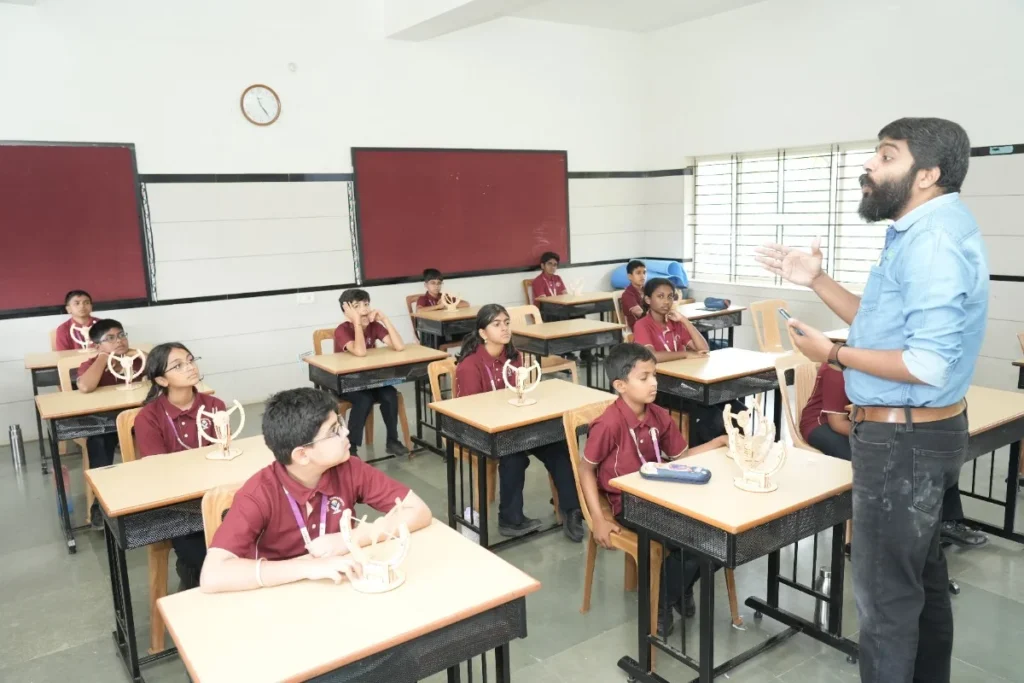
Every parent wants to ensure that their child is protected from all disappointments. However, sometimes parents must let their children struggle.
Experiences from our own lives demonstrate that by enabling children to make mistakes and then helping them to understand what went wrong, children gain confidence.
Though at times very difficult to do, parents need to let their children struggle and make mistakes in order for the children to gain confidence.
Parents let their children struggle because they want them to learn a lesson;
however,
this may not always be necessary in every situation.
As children grow older, they are exposed to more challenges and difficulties in their lives.
During these periods, encouraging the child not to give up and letting them struggle a little bit more can teach them the lesson that they are capable of overcoming challenges.
5. Community Still Shapes Character
Even in our increasingly individualistic, tech-focused society, kids can still learn some of life’s most valuable lessons from others.
They learn on playgrounds, in classrooms, on stages and playing fields. They learn to share, work together, to disagree, to lose and win, to cheer each other’s successes.
A child who has done a team sport learns many things that can’t be taught by a lesson or an app. These common interactions shape character in ways that stay with a person.
6. Comparison Is the Enemy of Confidence
For decades, comparing children with their siblings, cousins, neighbours or classmates was almost normal. Marks were compared, achievements were compared, and even personalities were compared.
Parents nowadays are gradually giving up this habit. They ask less how their child is doing in comparison to someone else, and pay more attention to how their child is doing.
Sure, it’s never easy. But children who can see their own growth instead of always comparing themselves to others, will have confidence in their progress as well!
7. Curiosity Outlasts Rote Learning
Children who are encouraged to ask “why” often remember much more than children who are simply asked to memorise an answer.
Fifteen years in classrooms have shown us this repeatedly. When children are genuinely curious about something, they want to understand it. They ask questions, make connections, and often remember what they have learned long after the test is over.
There is a reason children ask so many questions. Sometimes, that curiosity is exactly where real learning begins.
8. Indian Roots Give Children an Anchor
Children are growing up in a world that is more connected than ever. They encounter different cultures, languages, and ideas from a very young age.
In the middle of all that change, having a connection to their own culture, language and values can give children a sense of identity. It tells them where they come from while leaving plenty of room to discover where they want to go.
Roots don’t hold a child back. They can give a child something steady to hold on to while everything around them changes.
9. Global Exposure Builds Adaptability
Being rooted, however, doesn’t mean being in a fixed place
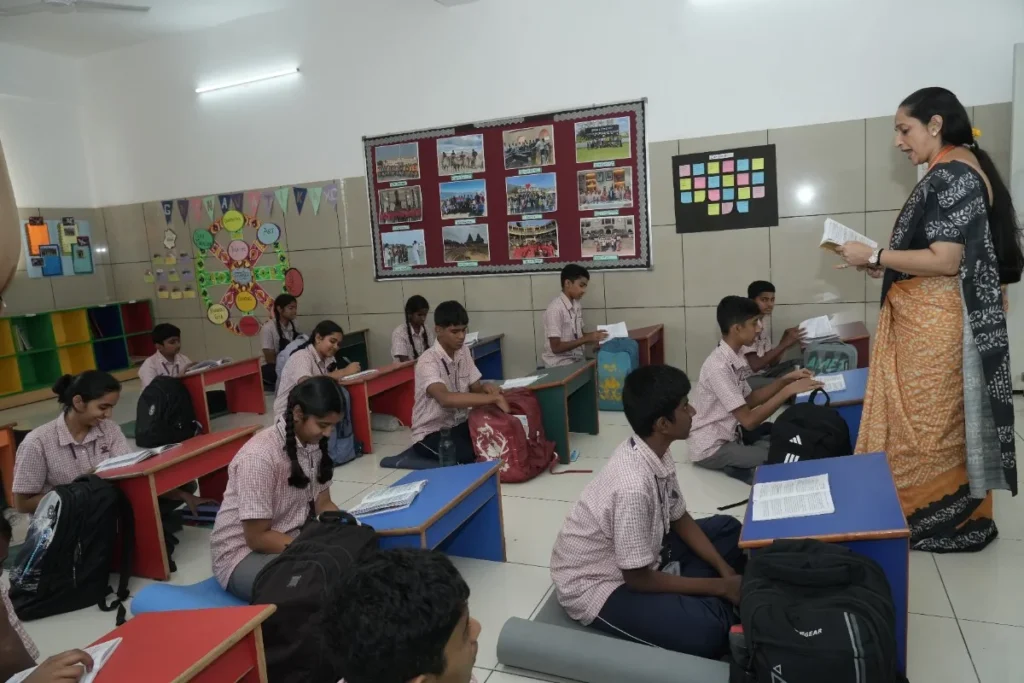
Children also learn by coming into contact with different people, ideas, and different ways of looking at the world, which helps them understand that there are other valid points of view.
These two things don’t have to be mutually exclusive; a child can take pride in where they’re from and still be curious about the rest of the world.
10. Play Is Not a Break From Learning, It Is Learning
It is easy to think of play as the thing children do after their “real work” is finished. But play is part of how children learn too.
Sports, art, music, games and simply spending time playing with friends teach children how to communicate, solve problems, make decisions and work with others.
The families we’ve seen over the years often understand this. They don’t treat these activities as something that has to be fitted in only after academics are taken care of. They recognise that children need space to explore different interests and, quite simply, to enjoy being children.
11. Parents Need a Village, Too
Raising a child is rarely something one person can do alone.
Parents have one view of their child. Teachers see another. Coaches, friends and other members of the school community may see different sides again.
When these people communicate and work together, children benefit. Parenting doesn’t have to be an isolated experience, and asking for another perspective doesn’t make a parent any less capable.
Sometimes, having the right people around a family can make all the difference.
12. Leadership Starts Small
Leadership does not start when you get a big title
It could be that a child is asked to lead a class activity, to organize a group, to be responsible for something, or just to speak up and share an opinion.
They are small things, but they help the children to make decisions and to take responsibility. So later they will be more prepared to do bigger things.
Being a leader is not something they learn by sitting down and being talked to. It is something they have to experience.
13. Mental Health Conversations Can't Wait for Adulthood
Fifteen years ago, conversations about a child’s stress, worries or anxieties were not always as open as they are today. Many families were less comfortable talking about these things, or simply weren’t sure how to approach them.
That is changing.
Parents are increasingly recognising that emotional wellbeing deserves attention alongside physical wellbeing. Children experience pressure too — from academics, friendships, expectations and the many changes that come with growing up.
Schools have had to respond to this change as well. Sometimes a child doesn’t need another solution or another instruction. They simply need someone to listen.
14. The Right School Environment Changes Everything
Families searching for schools near Yelahanka, Bangalore increasingly look beyond rankings, infrastructure, and brochures.
However, the factors mentioned above are not the only things that parents care about. They also want to get to know how things function at the place where their children will spend most of their day. Are teachers going to know them? Will they feel safe asking for help? And what values does the school promote?
The school is not only the building, the place, and the equipment. It is the environment in which a small group of individuals spends one of the most important periods of their life.
15. Every Child's Definition of Success Is Different
Perhaps the most significant change that has happened over these fifteen years is our understanding of success.
There was a time when success was a somewhat predictable path. Now, more and more parents are beginning to understand that your child’s path could be different.
Perhaps their success will come in the form of academics.
But maybe they want to pursue sports, the arts, music, technology, entrepreneurship, or something else.
Children aren’t all the same; they don’t all have the same interests or ambitions. Allowing them to find themselves better suits their future than forcing them to fit into the mold of what society has deemed to be successful.
A Partnership Built on Experience
These fifteen lessons haven’t come from textbooks or theory alone. They’ve come from years of shared classrooms, school events, conversations with families, report cards, celebrations, and everyday moments that don’t always make it into a school brochure.
As one of the established CBSE schools in Yelahanka New Town, Bangalore, our team has had a front-row seat to how Indian parenting has changed over a decade and a half. We’ve grown alongside the families we serve, and we’ve learned from them too.
The next fifteen years will bring their own changes — in technology, in society, and in what children need to thrive in a world we can’t fully picture yet.
What we can be fairly sure of is that children will still need guidance, encouragement, patience, and people who are willing to listen to them.
That is the partnership we want to continue building with parents: one lesson, one child and one conversation at a time.
FAQ
How have Indian parent's approach to parenting changed in the last few years?
While in the past, they were concerned about a child’s scores and extracurricular activities, now they seem to be more interested in emotional wellbeing, technology, self-sufficiency, social life, and specific interests of their child.
Why is it important for children to have a wide range of emotional vocabulary?
Emotional vocabulary allows them to describe their feelings and states in detail, and therefore helps parents and teachers in understanding what is going on in a child’s life.
How can parents encourage children to be more resilient?
In order to teach kids to be resilient, it is necessary to enable them to experience age-appropriate hardships and allow the kids to overcome the challenges on their own. Besides, parents should set an example not to overstep in resolving seemingly every little problem that their children can face.
Why is it a good idea for children to learn digital literacy?
Children live in a technologically advanced world; hence, digital literacy is becoming increasingly vital to the development of children, as this gives the kids technological knowledge, enhances critical thinking, and enables children to maximize the usage of technology.
Is academic success enough for a child?
Academic success is vital, but only constitutes one facet of development; a child’s self-confidence, communication skills, creativity, collaborative skills, and non-academic interests are equally important.
Why is play an important aspect of childhood development? What benefits do sports, music or art bring to children’s learning?
Play allows children to experiment, interact, solve problems, and communicate with each other. Sports, music and art can also provide children with values and lessons that may not be taught in the traditional classroom.
Can a child be exposed to global influences while still being grounded in their Indian heritage and culture?
A child can learn and be exposed to global influences, but they will also learn about their own culture and heritage. Learning the values of their own culture will not prevent them from learning about and appreciating other cultures.
What should parents consider while choosing a school?
While a parent can focus on academic programs and infrastructure, in my opinion, it is crucial to take into account the school’s ethos, teaching methods, and support offerings, as well as the activities and the environment where the children will be spending a lot of their time.
Why is communication between a child's parents and their teacher important?
Because the parent and the teacher see different aspects of the child, they should communicate to benefit the child.
Should every child grow up to be the same thing, or do they need to explore their interests and find what they want to be?
The children need to explore their interests and find what they want to be. Children are different from each other. Some have different interests and goals. Let them find what they want to do.