Ask any parent what they want in a school, and the answer is rarely a set of criteria that the institution will have to meet. It is something much more basic, much more human: I want my kid to be seen.
Ask any six-year-old who is still struggling to hold on a pencil properly, to read a sentence, to raise his hand in class without shame, and he will tell you the same thing. This is why, when you are looking at schools, the student-teacher ratio is such a vital piece of information. It is the most important factor in deciding what kind of learning environment your child will be placed in. And so, we set our ratio at 1:10, for the benefit of the students at Vishwa Vidyapeeth.
What a 1:10 Ratio Actually Looks Like
Numbers on a brochure can be misleading; think of two classrooms
In the first one, one teacher guides forty children. She is passionate and competent, yet her time is limited. The quiet child in the back who quietly does not understand the lesson is likely to be overlooked for the better part of a year.
In the second classroom, there is also one teacher, but only ten pupils. She will quickly learn who is always second-guessing himself, who flies under the radar when it comes to completing tasks, and who needs a second explanation. There is no need to guess; she can simply observe.
That is the value of a 1:10 ratio; it allows educators to turn a lecture into a dialogue.
Confidence Grows When Children Are Heard
Confidence in a young apprentice is something fragile. It is formed gradually through micro-experiences of being heard and taken seriously.
In a small group, each child has the opportunity to speak out. To answer questions one after another, to read aloud, to explain a particular point. This becomes a routine part of the lesson, not an exceptional situation when the teacher happens to call on the most eager hands.
Another manifestation of self-confidence that parents will notice in their children is the audacity to make mistakes. By being allowed to fail in a safe environment, the students learn that errors in the process of learning are normal. As there is no fear of being rushed to correct them, they do not hold back on their attempts.
Early Intervention Depends on Early Noticing
Every educator with years of experience can recall hundreds, if not thousands, of small problems that could potentially turn into big issues if not handled properly. For instance, a child may forget how to read properly in Grade 1, so in Grade 3, they start to have trouble understanding what they read. Another student may have difficulties grasping the idea of numbers, and their lifelong relationship with math is doomed to be problematic.
Therefore, the issue is not one of those cases where the problematic area is readily apparent. Instead, it is masked, hidden, and covered, sometimes to the point where the teacher cannot understand it in time. After all, it would be easy to overlook a child’s confusion in a group of thirty, but not so in a group of ten.
This is how early intervention can be a true blessing for struggling learners. It gives the instructor a chance to stop and explain the issue, find a suitable solution, and ensure that nobody is confused right now and will not be in a month or a year.
Learning at the Pace the Child Needs
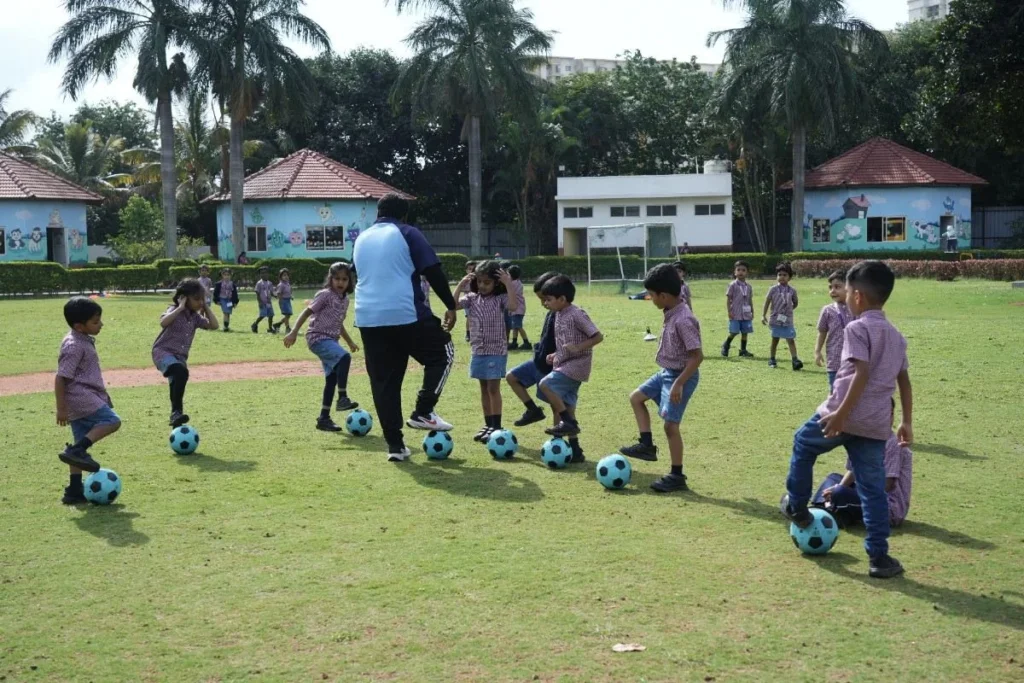
No two children learn at the same pace. This is not a problem, but rather a fact. Some children are quick learners and ready to advance right away, while some kids need a slower, more roundabout approach before they are able to understand something.
Low-density classrooms would create an environment where both these children could learn effectively. A teacher could challenge one child with a more difficult task while helping another child reinforce their basic ideas. Neither child has been disadvantaged or diminished by the learning environment.
This is important because it is in primary school that children form their opinions on how learning should be. If a child can become used to learning being an accessible and approachable challenge, then they will feel the same at Higher, Secondary and beyond.
Relationships Are the Real Foundation
Children learn best from those adults they identify with. Seems simple enough, but in a classroom of ten students it is easy to forget.
By knowing her students as she does, the teacher can talk to them about their interests and feelings on a personal level and make judgments about things such as discipline and encouragement. She knows who worries about which subject, who sits with who at lunch, and who is proud of what accomplishment from last week. She also helps inform the parents.
In the parent-teacher conference, instead of the parent having to ask vague questions about their child, they can have specific answers concerning their child’s abilities, shortcomings, and the course of action the teacher feels should be taken.
So, by knowing her students, the teacher can communicate with them in a better way and the parents in their best interest.
Small Groups Make Room for Whole-Child Learning
A lower ratio also allows a school to provide things outside of the textbook. Activities, discussions, group projects, and exploratory work are all vastly more effective when every child is able to participate, rather than observe.
With a small group, a class discussion won’t be dominated by the same few children; a group project allows for every child to have a meaningful role; a science activity allows every child to experiment, rather than standing by watching others do it. Children will actively engage and participate in learning, rather than being passive observers. Engagement leads to comprehension.
Questions Worth Asking When You Visit a School
If you are comparing primary schools near me, there is another ratio that you should ask about, but it’s only a start. Here are a few other questions that you may want to ask to get past ratio information:
Is the ratio maintained throughout the day, or only in particular classes? What you say on paper needs to be maintained in the classroom.
How does the teacher ensure that he/she is measuring the progress of each child? Small classes are a benefit to the child only when the teacher takes the time to measure because the small size allows him/her to do that.
How does the teacher handle a child that is failing or one that is excelling? Ask for specifics rather than generalities.
Can you observe a class? There’s no better way to know what’s going on in a class than to watch the teacher and child interact. The rapport between the two is vital.
Starting Early: Why It Matters for Nursery Too
The importance of individual attention does not begin in primary school. It begins the moment the kids enter the school door.
When parents come to different nursery schools in Bangalore, they are interested in the resources and activities. But for a three- or four-year-old, it is essential to have an attentive adult who will greet every morning and be genuinely concerned if something is wrong. Small groups are necessary so that the child can get used to the new environment, find a few familiar faces, and feel safe, leading to calm learning.
The attitude, curiosity, and self-confidence learned from those early years stay with them throughout their lives.
Choosing With the Child in Mind
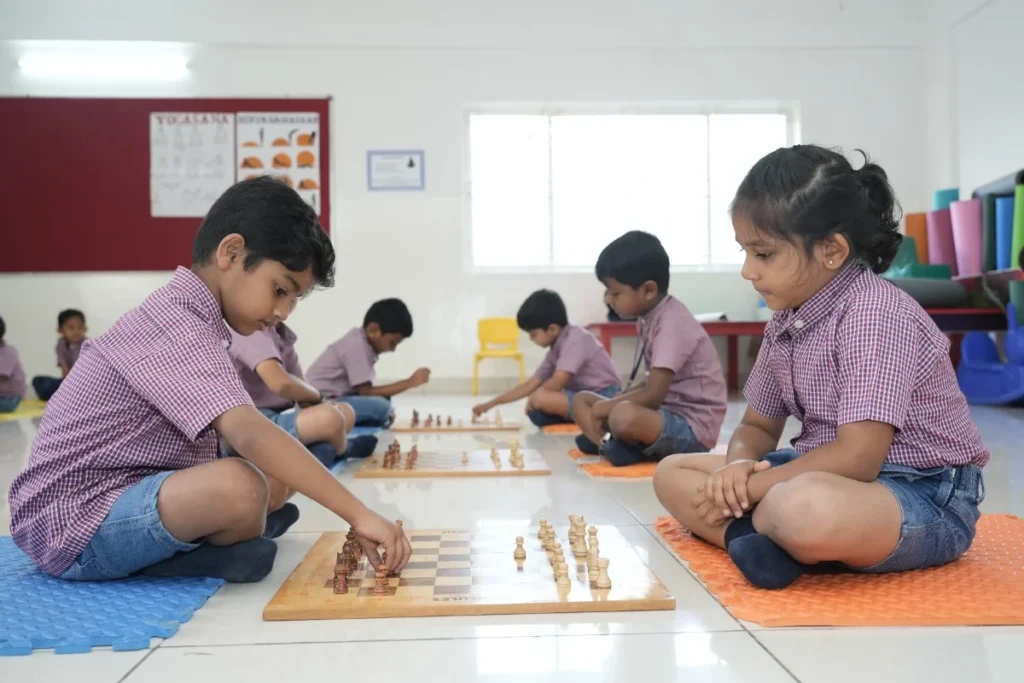
When searching for the best primary schools near me, it is only natural for families to be drawn to results, reviews, and reputations. While all of these factors are important, the question that matters most is often left unasked. Will my child be known here?
A 1:10 student-teacher ratio is one answer to that query. It is a promise that the early years of learning are not being compromised in the name of expansion, and that each child is in fact being taught by someone who has the time and attention to truly know them. At Vishwa Vidyapeeth, this philosophy manifests itself in all areas of early childhood development, from the classroom to the canteen, and from one child to the next.
FAQ
What is a one-to-ten student-to-teacher ratio?
A one-to-ten student-to-teacher ratio is one where the students have one teacher for every ten children, which allows the teacher to be more acquainted with each child’s learning needs.
Why is a one-to-ten student-teacher ratio beneficial to primary school children?
Primary school is an extremely important stage in a child’s life; thus, the lower the student-teacher ratio, the easier it is for the teacher to notice if a child requires any additional assistance in class, as well as allowing the child to have a voice in the classroom and be able to learn at his/her own pace.
Would a smaller class help a child to be more confident?
Having a smaller class would help increase a child’s confidence because they would have more opportunities to ask questions, read aloud, answer questions, and participate in class, which are all things that can help a child develop communication skills.
How would having a small class size help a teacher see if a child is struggling?
A smaller student body would allow the teacher to connect with their students and know which students need to be aided in which subjects to prevent them from falling behind in class.
Does a one-to-ten ratio matter only in primary school?
Having a ratio of one to ten matters at every level of a child’s education. Receiving personal assistance from an early age can enable them to thrive within the educational environment and feel confident within a larger classroom or lecture hall at higher levels of education.
What questions should a parent ask concerning the one-to-ten student-teacher ratio?
A parent should ask if the student-teacher ratio is throughout the whole school, how the teacher keeps up with their child’s progress in the class, how the teacher would deal with children who need more attention or are far above the rest of the class, and if the teacher can see the class being taught.
How would a smaller class size help a child participate in things other than their academics?
In a smaller class, the teacher can give more of an opportunity for each child to speak, debate, lab, play a game, and do other things that can’t be done when sitting down and listening to a lecture.