Have you ever wondered why your child remembers every minutest detail that you spoke to him/her about weeks ago but completely forgets the things you asked him/her to study for the exams that were held yesterday?
Such scenarios are not uncommon as a matter of fact.
Sometimes the children remember things because they have experienced it, discussed it or found it interesting. Sometimes, they just memorize the answers because they know that they need to learn it for school. There is a difference between the two, and it tells us a lot about a child’s learning process.
This is where Neural Education comes into the picture.
The teaching methodology at Vishwa Vidyapeeth focuses on the way the brain learns, and how teaching can help the child grasp, understand, remember and apply what he/she learns, thus going beyond rote learning and making the child more inquisitive and willing to find solutions to problems, and explore new ideas.
After all, there is more to gaining knowledge than just writing down a few lines from the textbook in one’s notebook.
What Is Neural Education, Really?
The idea sounds intimidating. Its concept is simple in itself, however. Neural Education uses our grasp of the brain in order to dictate the most effective methods of learning for children.
Imagine a child struggling to solve a puzzle. He/she may try a piece and realize it does not fit. They may turn it over and try again. No one is there to tell them what to do. The child looks and tries. They make mistakes and learn.
Imagine if that same type of curious, exploratory nature was applied to the classroom!
Instead of sitting and listening to a lecture, and memorizing information, children are encouraged to question, associate, and find what they need to know for themselves. Of course, a teacher must guide them along the learning process. However, the child is now actively taking part in finding the information, rather than just memorizing it.
This is the concept of Neural Education as seen in Vishwa Vidyapeeth. The school implements a method whereby students are encouraged to take charge of their own learning, think logically, learn independently, and recognize their own strengths.
Neural Education is not about turning the classroom into an active arena, or eliminating the classic textbook. It is about encouraging the kids to understand why they’re learning what they’re learning. And not just that they need to learn it, because the syllabus says they must.
Why the Brain Plays Such an Important Role in Learning
Parents often hear their children say ‘I knew that yesterday, but I’ve forgotten it today’ and wish that they could spend more time learning. But learning is not about sitting down and reading a book about something and then expecting to remember it forever. Children need the opportunity to learn about things again, draw connections and practice applying their knowledge.
One of the concepts behind the Neural Education approach of Vishwa Vidyapeeth is Long-Term Potentiation (LTP), which in neuroscience is ‘the persistent strengthening of synapses based on recent patterns of activity, usually lasting more than a few hours’. In other words, a process that strengthens the connection between two nerve cells that happens after repeated stimulation, like learning and memory.
How does the school’s approach take advantage of this concept?
Their page describing Neural Education resources mentions that lessons begin by recalling the LTP words they learned in the previous lesson. The children then go on to learn their new LTP words for the new lesson.
While it may seem like a small thing, it gives the children the opportunity to recall the LTP words and therefore the information they learned in the last lesson, instead of leaving that lesson’s information behind as soon as the next class begins.
By drawing connections between lessons like this, children are able to take what the learned before and apply it to what they’re learning now. They can go beyond just having a number of different lessons that all have to be memorised separately, but instead learn how the lessons interconnect to form one cohesive set of knowledge.
Of course, practice is permanent and children won’t all learn at the same speed. But it is important to give them the opportunity to go back to information and learn it a new so that they can grasp it.
Learning Should Be More Than Listening and Writing
We have all been in classrooms where the teacher teaches a certain subject, students copy notes onto paper and every student is expected to know the same information. While the strategy can be a good starting point for the development of concepts, it does not always give kids the necessary time to explore them.
Vishwa Vidyapeeth’s Neural Education technique encourages kids to take a more active role in their learning.
The school’s website claims that discovery learning encourages kids to apply what they know and work toward answering the question with teacher assistance.
Imagine what a youngster would do if you posed them a question that they don’t know the answer to. They could guess, try to find clues, have a conversation with a buddy, or even try to become something else.
No matter what their primary reply was, the child participated and tried.
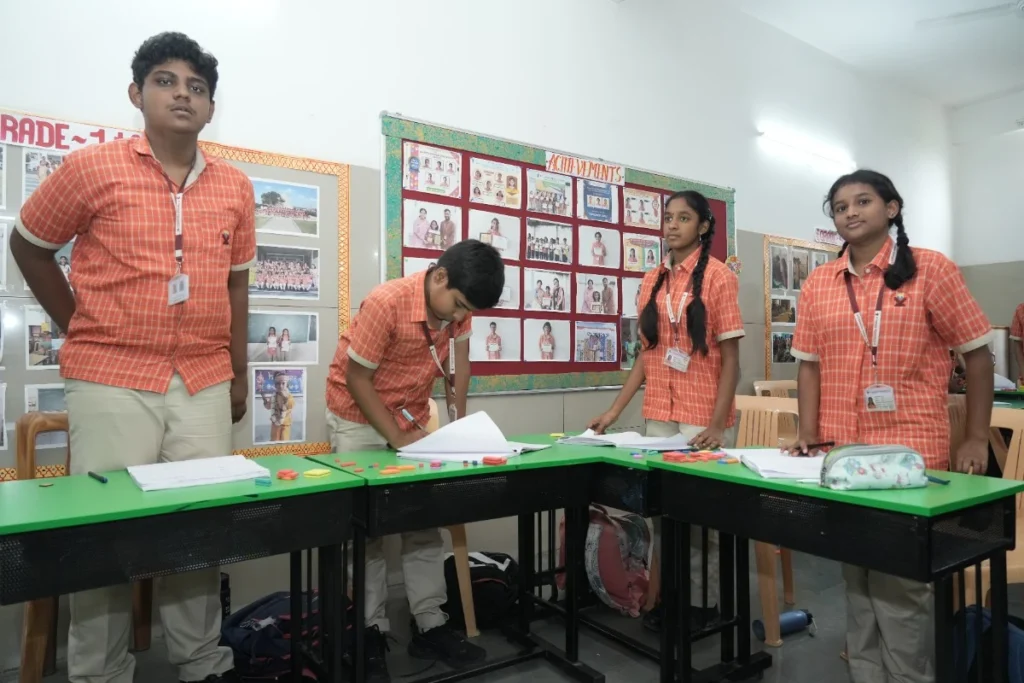
The teacher could assist the youngster in comprehending their mistakes and leading them to the correct response.
This allows children to be comfortable with not knowing the answer to a query and realizing that learning is not a process that always ends with getting it right the first time.
Sometimes, the most valuable lesson is discovering why an answer was incorrect.
The Way Children Learn Matters Too
A child may be able to understand something if they are shown, but another child might have to talk it out, discuss, or even walk through a process in order to fully understand the concept. Even for children sitting in the same classroom these kids may approach new concepts differently.
This is why the teaching methodology used by Vishwa Vidyapeeth offers multiple ways to approach and engage with a subject.
Experiential Learning: When Children Get to Try Things Themselves
Some lessons are easier to understand when children are able to see or experience what they are learning about.
Vishwa Vidyapeeth’s published curriculum includes things like field trips, outdoor education, labs, experiments, projects and community service.
These opportunities give children the chance to apply what they learn in school to things that they see or experience.
There is a great difference between reading about an experiment and actually taking part in an experiment. Children are able to see what they are learning about and also are able to ask questions and think about why they were able to get a certain result.
The activity is only part of the learning however, children should be able to talk about what they learned and apply it to the lesson in order to understand it.
Peer Learning: Sometimes a Classmate Explains It Best
I’m sure we’ve all seen one child explain something to another child in such a way that it made the explanation ‘click’ in the other’s head?
Sometimes children can explain things to each other using an example or wording that they can relate to better than adults can
Try explaining something to someone else and see if you really understand something as you explain it
The institution Vishwa Vidyapeeth utilizes peer-learning. The students learn about each other’s strengths and improve each other rather than just relying on the teacher to explain things.
They also develop skills such as listening to others and sharing ideas and work
Valuable skills that can be used outside of school on group projects or even in the future when working in groups.
Flipped Learning: More Time to Understand in Class
Not all lessons are lectures.
The term flipped learning refers to a situation in which students learn and teachers teach.
The students do the learning at home, and in the classroom they can discuss anything that they may have struggled with regarding the things that they learned.
Therefore, the students are able to come into the classroom with some background information on the subject.
They can also ask the teachers for things that they may not be clear on,
and the teacher is able to help them learn the more difficult parts of the material.
By doing this, the purpose is to make classrooms more about discussion and understanding.
Project-Based Learning: Putting Ideas to Work
Sometimes kids might find it easier to learn something if they have an application for it
The project based learning of the Vishwa Vidyapeeth has the students working on projects that could require them to research, analyze, make decisions, problem solve, and collaborate.
This helps them apply different solutions and ideas to make one outstanding project rather than just memorizing a fact or idea.
Working on a project will also show them that something may take a process to work out, where they will have to discuss and make decisions to find a solution.
Instead of just getting an answer right away they will have to work through some issues to find a solution.
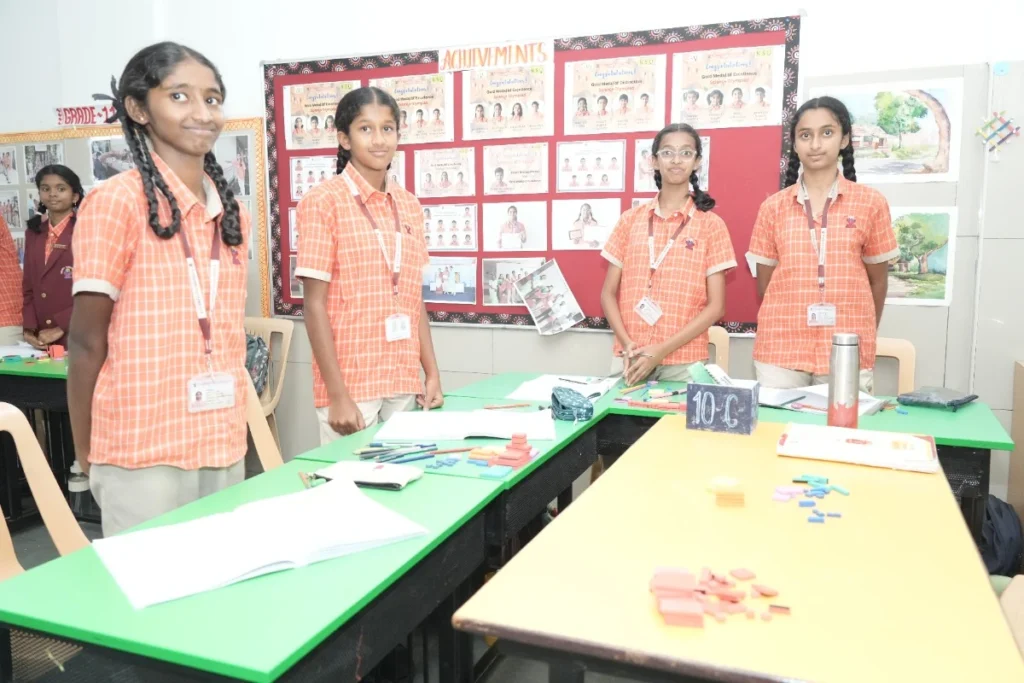
Seed to Sapling: Hearts-ON, Heads-ON and Hands-ON
A specific approach that one of the educationalists, Vishwa Vidyapeeth is known for, is his Seed to Sapling educational philosophy. This unique approach is aimed at making the experience of acquiring knowledge more interesting, engaging and involving, while also focusing on the development of children’s values.
This system comprises three main components: Hearts-ON, Heads-ON and Hands-ON.
Hearts-ON is a part of the concept that deals with the relevance and importance of information and provides children with reasons for being interested and involved.
Heads-ON refers to the explanation of the information and seeking of answers that would satisfy the curiosity and aid in understanding the necessity of the information.
Finally, Hands-ON is a part that regards practical application of the acquired knowledge and the opportunity to become actively involved in the learning process.
These three elements are interconnected and form the concept of active learning, where children are not passive receivers of information. Furthermore, they become interested in acquiring knowledge, are able to think through and understand the material, and are given an opportunity to actively apply it in practice. Such an approach is beneficial as it provides a basis for active learning in the early stages of learning. Also, it can be successfully implemented when building the foundation of academic success.
Furthermore, the concept aids in developing more than just academic skills, as it focuses on involvement and values.
Helping Children Stay Interested in Learning
Every parent knows that getting a child to focus is never easy. A lesson that interests them one day, can leave them feeling frustrated the next day. Children can understand a topic but may struggle to connect with it enough to follow it.
Focus can be affected by many factors, including tiredness, distractions, stress, and the way a lesson is presented.
Vishwa Vidyapeeth’s Neural Education resources discuss the importance of a positive learning environment and include brain breaks as a method to refresh the mind to ensure focus and creativity.
The aim is not to keep children entertained every minute of the school day. Learning requires effort and a child must learn to develop patience to work through difficult topics.
But a child who has the opportunity to participate, to ask questions and approach an idea in different ways may find it easier to remain engaged in the lesson.
Feeling comfortable enough to say, “I don’t understand this,” matters too. When children are not afraid to ask for help, teachers have the opportunity to address confusion before it grows.
A supportive classroom does not remove every challenge. It helps children to face these challenges with guidance.
Every Child Has Their Own Strengths
Some children are quick to answer questions; others are happy to listen to answers from others first. One child enjoys working out number problems, while another child finds writing, drawing or practical work easier ways to show what he/she knows.
It’s easy to compare one child to another, often in the context of marks or results. However, the abilities of a child cannot be measured on one question or one subject.
Vishwa Vidyapeeth considers the identification of a child’s individual strengths and hidden talents to be a key element of its Neural Education philosophy.
This is about focussing on more than what a child knows and looking to the way in which they learn. It is about seeing what their interest lies in, and what kind of help or support enables that child to reach a new level of understanding on a tricky topic.
A child who is struggling with an area of work might need further practice or a different explanation. Another child might well be interested in being introduced to the topic in more depth.
Understanding such individual differences provides teachers with a really useful starting point for helping children to move forward in their learning.
It also helps a child to recognise that something can be challenging, without them being challenged themselves. At times, a child needs patience and needs to understand that they need a slightly different approach to really grasp a topic.
What Parents Should Look for When Visiting a School
When choosing one of the top 10 ICSE schools near me, factors such as academic results, facilities, activities and reputation are important to consider. But how can parents know what children really learn during the school day?
Vishwa Vidyapeeth’s published curriculum and pedagogy information details their CBSE-led approach, which includes Neural Education, experiential learning, peer learning, flipped learning and project-based learning.
Here are a few questions you might ask, if visiting schools:
- Do children get to ask questions? See whether classroom discussions give students a chance to voice their ideas and clear up any doubts.
- How are difficult topics explained? Ask whether teachers use practical activities, demonstrations or alternative approaches to help children understand a concept.
- What happens when a child makes a mistake? Look for an approach that helps the child understand the mistake and find a solution.
- Are students encouraged to work independently? Ask how children are taught to investigate questions, solve problems and take responsibility for their work.
- How does the school recognise individual needs? Find out how teachers identify areas where a child needs support and where they can excel.
You don’t need to be a neuroscience expert to ask these questions. To be more precise, you don’t need to understand what happens when your child is sitting in the classroom, to know how important these questions are.
Choosing a School for More Than Just Marks
When looking for schools near me within 5 km, the location as well the day to day commuting are critical in influencing our choice. However, parents are also concerned about what value the school can bring in terms of a holistic learning curve and nurturing environment in order to aid the overall development and growth of the child.
But what about the type of learners that your child can grow up to be?
Vishwa Vidyapeeth, Neural Education is focused on addressing these very concerns related to the way children learn, retain and develop their perspectives on subjects. A look into the published methodology of the school reveals that the same is in keeping with the need for revisiting concepts through the LTP words, exploring possibilities, learning through experiences and the Seed to Sapling framework, among others.
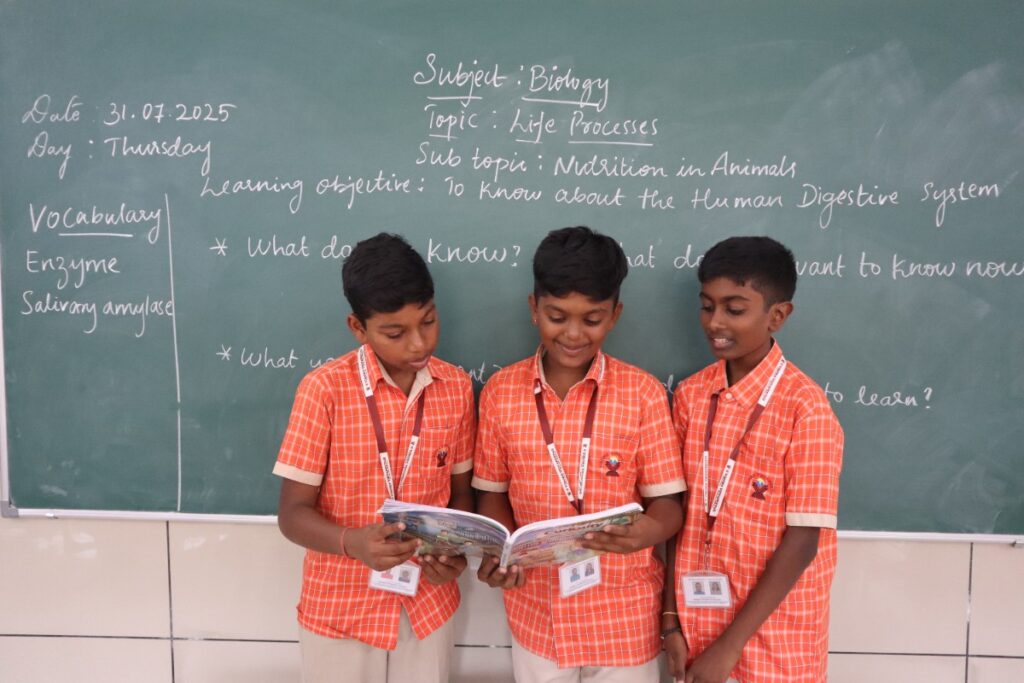
These methodologies drive the engagement quotient of the children towards a higher plane, ensuring deeper comprehension and greater understanding of concepts
For the parents evaluating the top 10 schools in Bangalore, knowledge of the teaching methodology employed by the institute can be a more effective guide compared to the infrastructure and academic excellence offered by them
A child may not remember concepts verbatim, and no teaching methodology can guarantee the ease with which a topic can be understood. But what a parent can do is that they can ensure that the environment is right for the child’s development and growth. Education can’t be merely about providing answers that can be written down in examinations and get high marks. It has to build in the child enough confidence and curiosity to question things around, and find solutions even when the first attempt fails. And that’s why we must think about the teaching methodology!
FAQ
What is neural education at Vishwa Vidyapeeth?
Neural Education at Vishwa Vidyapeeth takes neuroscience into account while using student-centred educational approaches. The school encourages the creation of a conducive environment for achieving meaningful learning, developing independent thinking, and identifying logical reasoning and personal strengths.
What does Long-Term Potentiation mean in Neural Education?
Long-Term Potentiation, which is short for Long Term Potentiation, is a term that refers to an enduring strengthening of the connections between nerve cells that occurs following repeated stimulation. According to the Neural education resources at Vishwa Vidyapeeth, reviewing words that were associated with LTP in previous lessons can help students to renew their learning.
How does Vishwa Vidyapeeth encourage children to think independently?
The school talks about methods such as discovery learning, flipped learning, peer learning, project based learning etc. They offer a platform for them to inquire, explore, collaborate and implement their learnings.
What is the Seed to Sapling initiative?
It is the effort at the Vishwa Vidyapeeth, which tries to encourage the experimental learning of Hearts-ON, Heads-ON, and Hands-ON. It is supposed to help the kids to engage themselves in the research of the specific subject, think about it, and study it practically.
Does Neural Education help children retain the information and knowledge they learn?
Neural Education works on the principle that learning may be aided by reviewing, practicing, and linking what one learns to things one already knows. All of these factors have been proven to enhance learning and aid memory, but every person learns differently.
Are these goals only concentrating on academics?
No, Vishwa Vidyapeeth’s objectives also comprise the development of logical reasoning and independent learning and recognizing hidden talents and saving young ones from undue pressure. The Seed to Sapling program also lays emphasis on the importance of emotional quotient and inculcating moral values.
What questions should parents ask about the school’s teaching methodology?
They may ask how lessons are taught, if children are encouraged to participate in practical activities, how teachers motivate students to think independently and cater to their individual learning needs. Observing a class can also give insight into the school’s approach to teaching.