Understanding The New
Assessment Patterns In CBSE
& ICSE Schools
The term assessment can evoke the same old memories when it comes to most parents, textbooks scattered on the table, last-minute cramming and the anxiety of receiving report cards. However, when you have a school child nowadays,you must have observed that tests no longer appear the same. And that is not a bad thing, honest.
CBSE and ICSE schools have been gradually reconsidering the assessment of children. There are still marks, but they do not reveal the entire story anymore.
Today’s assessment patterns are trying to understand how a child learns, not just how much a child remembers. For parents, knowing what’s changed-and
why-can help make sense of report cards that look very different from what we grew up with.
Why Is the Pattern of Assessment Changing?
The kind of world our children are currently living in is not even similar to the kind of world we trained them to know by rote learning. Information is everywhere. The only thing that is relevant at this point is that a child is able to interpret it, doubt it and apply it prudently.
Traditional exams rewarded memorisation. But memorising alone doesn’t teach a child how to solve problems, work with others, or make decisions. Education boards have recognised this gap. The shift in assessment patterns is an attempt to bridge it-by focusing on learning as a process, not a one-day
performance.
The New CBSE Assessment Framework
Explained
CBSE’s assessment changes are built around one clear idea: understanding matters more than recall. This is why many parents notice that exam papers look different today.
Understanding ICSE's Holistic Assessment
Model
ICSE has always focused on depth of learning, especially in language and conceptual clarity. The newer assessment approach continues this tradition, but with more room for creativity and real-world application.
Experiential Learning as a Major Assessment Tool
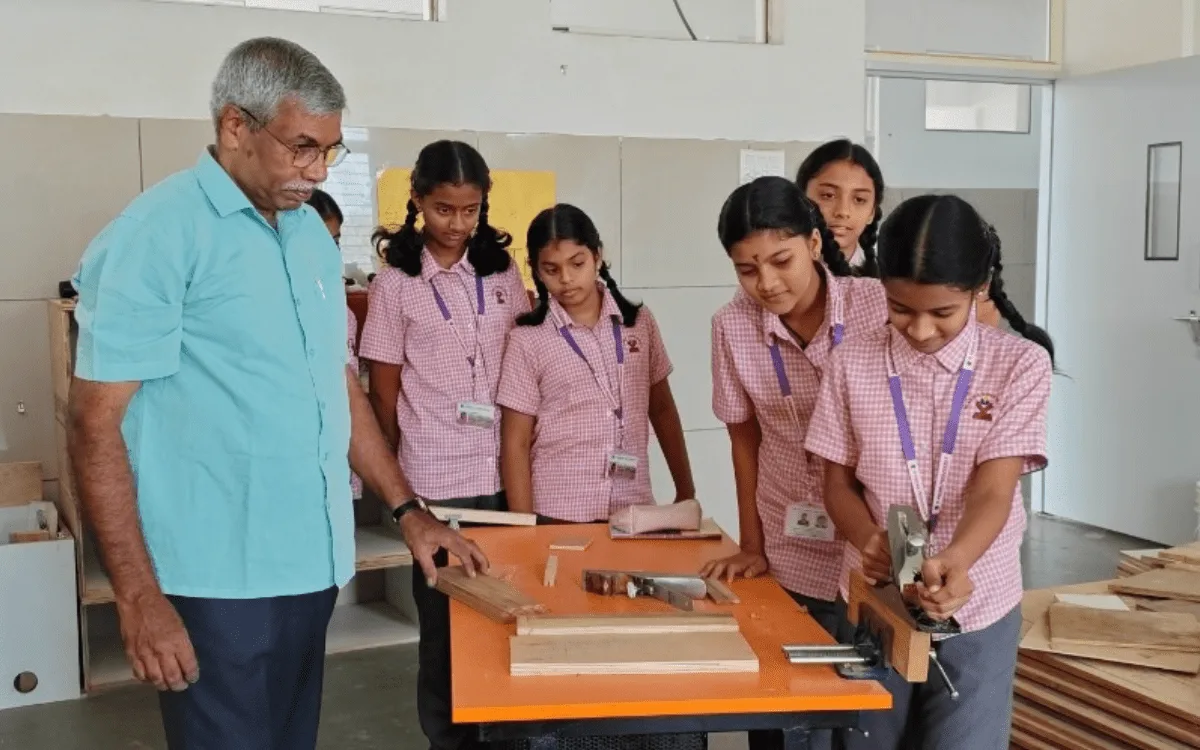
Among the more visible shifts in the two boards, the extent to which learning occurs through action is one of them. Children are not judged based on written
answers, but through experiences.
This can be group work, role-plays, presentations, experiments, or real situation-based problem solving. Such experiences assist teachers to observe how students interact, cooperate and manage responsibility. To a child, studying becomes more of a natural process and much more exciting than worksheets.
Life Skills Embedded Within the Curriculum
Today’s assessments don’t treat life skills as “extra” anymore. They have been seamlessly incorporated into daily education.
The skills that children acquire include thinking rationally, simple financial management, knowledge of environmental concern, online safety, and ethical decision-making. These skills, when evaluated together with academics, will make learning practical and relevant, a quality that children can actually apply outside the classroom.
Well-being and Mindfulness in Evaluations
Emphasis on emotional well-being is another significant shift that parents can observe. Schools are becoming more conscious that learning can be blocked by stress and pressure.
Yoga, mindfulness, reflection time, and value-based conversations are practices that help children to slow down, concentrate and learn about their feelings
more. By evaluations that reward work and progress, not only results, children will be more comfortable making attempts, failing, and getting better.
Choosing the Right School in a Changing Education Environment
With the changing assessment, a lot or parents who seek the Best schools in Bangalore are now more focused on teaching strategles and assess procedures. The way a school handles assessment usually tells a lot about its interest in the overall development of a child, not only achievements in
academic scores.
The appropriate environment assists children in developing consistently, without being scared or continuously being compared.
A School's Role in Supporting Holistic Assessment
Schools like Vishwa Vidyapeeth School consciously align teaching and assessment with real learning experiences and strong values. Through its contemporary evaluation methods, Vishwa Vidyapeeth School aims to enable the students to grasp and master concepts profoundly, be responsible in their work, and develop with confidence.
It is this moderate approach that lots of families are seeking nowadays when thinking of the top schools in Bangalore- a place where they feel their learning is
meaningful, conducive and prepared for the future.
Conclusion
The new patterns of assessment in CBSE and ICSE schools are a very much-needed change of approach to education. These systems provide children with time to think, experiment and develop by not being bound to rote memorisation and the exam pressure.
When assessments are used as tools for understanding rather than judgement, children don’t just perform better-they learn better. And that, ultimately, is
what education should be about.