- Phone : +91 7022009757
- Email : enquiry@vishwavidyapeeth.edu.in
- Work Hours : Mon - Fri : 9:00 am to 3:00 pm

- Register Form
- Admission Form
- Contact Us
Contact
- Hotline 1280-0821
- 1810 Campus Way NE Arizon
- +(62) 800-567-8990
- arizon@domain.com
Social Media
Dasha Prabodha
Cbse Schools in Bangalore
At Vishwa Vidyapeeth, we understand that one of the key challenges in modern education is the gap between theoretical knowledge and real-world application. This often stems from a lack of essential skill development in the formative years. In today’s fast-evolving global landscape, skill development is not just an enhancement—it’s a necessity.
To bridge this gap and empower our students with the tools they need to thrive, we have introduced “Dasha Prabodha”—a unique skill-building initiative aimed at holistic development. The program is designed to help students recognize the impact of their actions, develop accountability from a young age, and grow into confident, responsible individuals.
Education and skills must go hand in hand. Through Dasha Prabodha, our goal is to nurture strong communication abilities, collaboration, leadership, and social responsibility. This initiative plays a vital role in shaping confident speakers, effective team players, and thoughtful contributors to society.
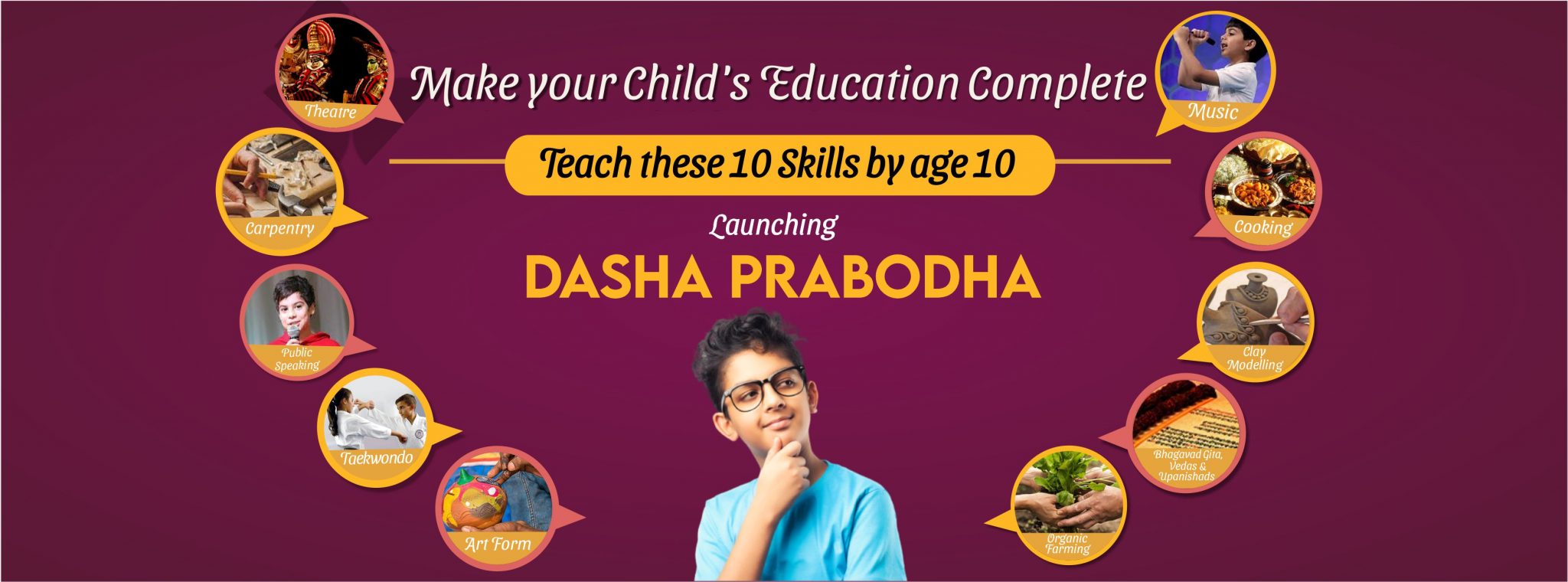
As part of the regular curriculum at Vishwa Vidyapeeth, students are guided through ten essential life skills. Each skill is thoughtfully integrated to build a balanced, well-rounded personality. A brief overview of the importance of each skill is provided below:

Bhagavad Gita, Vedas and Upanishads
(वेदोपनिषत् गिताध्यानम् च)
One of the most valuable lessons we hope to pass on to our children is how to live a peaceful and meaningful life by learning to distinguish material truths from deeper reality. This is precisely why we have chosen to guide them through the teachings of the Bhagavad Gita.
We encourage our children to read the Vedas and support their understanding by relating the teachings to simple, real-life examples. Approaching these texts with an open mind helps them discover answers to questions they might never have imagined could be answered within a lifetime.
The Upanishads, among the most profound works in Indian spiritual literature, played a crucial role in shaping spiritual thought during ancient times. They marked the shift from the ritualistic practices of the Vedic era to the emergence of deeper philosophical insights that continue to influence us today. Studying them allows children to appreciate the beauty in everyday life, ultimately leading to lasting inner joy.
Organic Farming
(कृषि कौशल्यम्)
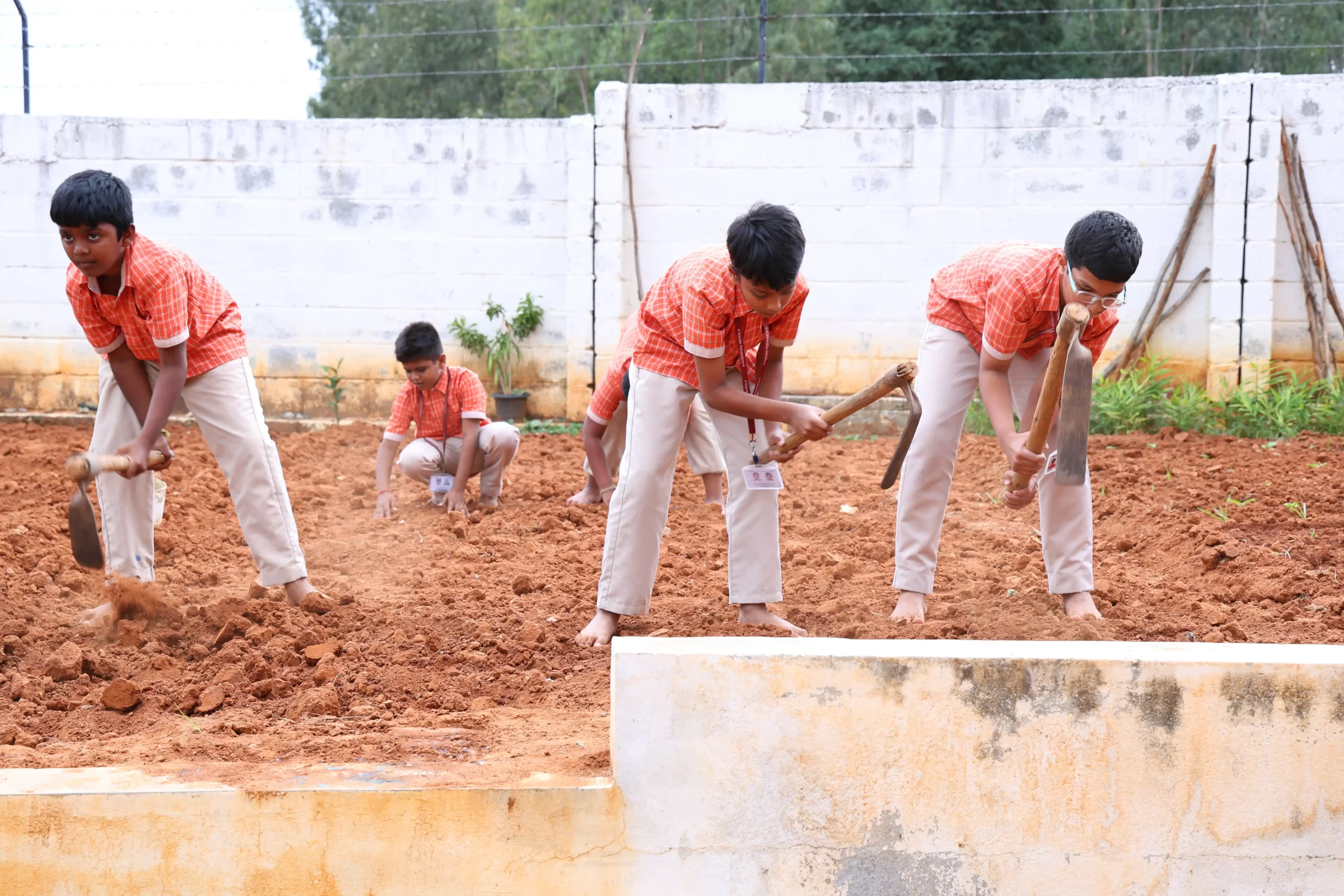
At our school, we believe that organic gardens and hands-on learning through nature-based curricula offer a unique and impactful way to educate students. Through these programs, children not only gain a strong foundation in biology, ecology, food, and nutrition but also develop the practical life skill of growing their own food.
By engaging in the process of cultivation, students come to understand and appreciate the immense effort that goes into producing the food we eat – fostering respect for farmers, who are the backbone of our economy. Moreover, this experience nurtures a sense of gratitude and mindfulness toward food itself, aligning with the cultural values and habits we seek to instill in our students.
Clay modeling
(मृत् कौशल्यम्)
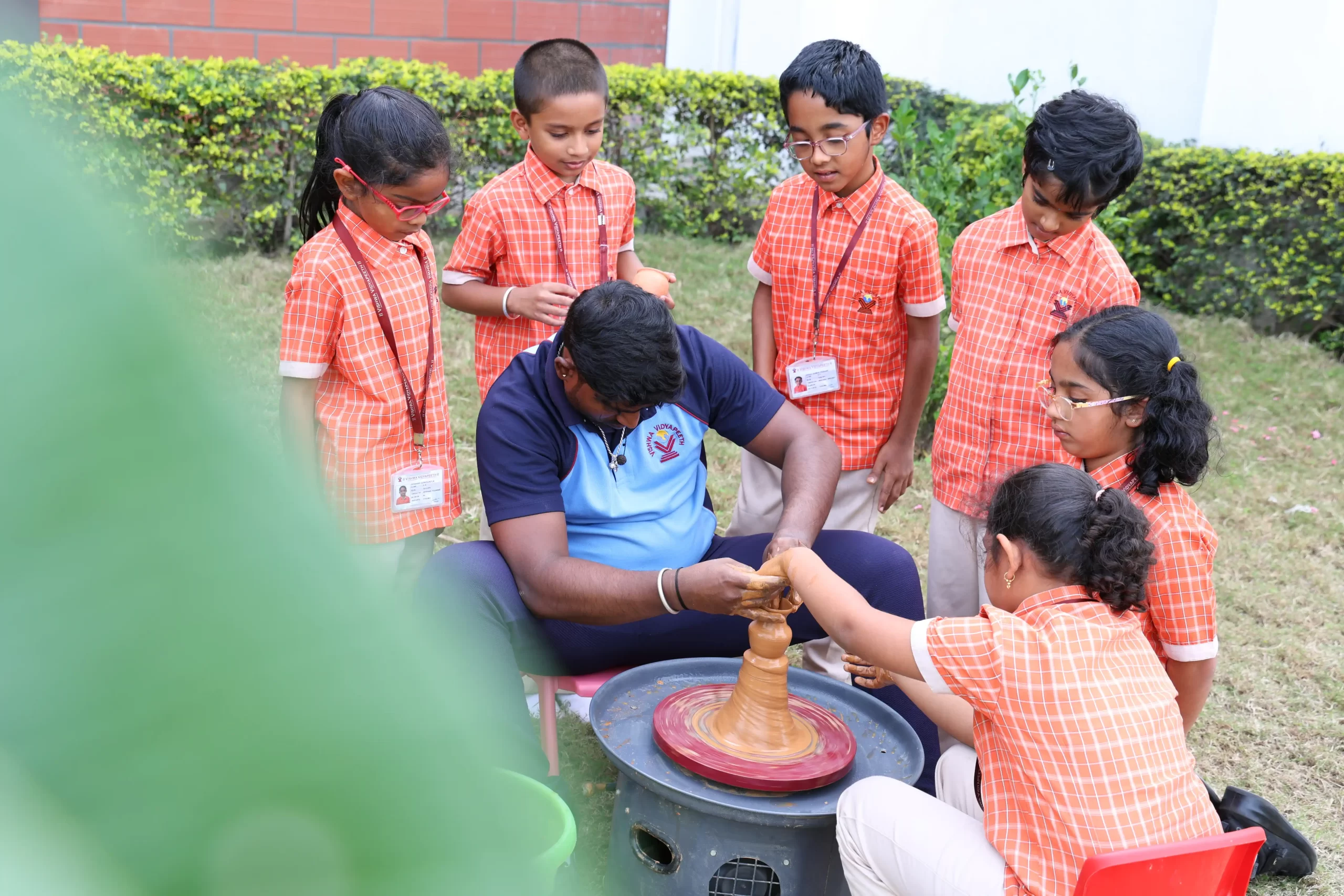
We introduced clay modeling into our school routine because of the natural sense of relaxation and calm it offers children through the simple act of touching and shaping clay. This tactile experience naturally draws children in, encouraging them to explore and play-while simultaneously strengthening their fine motor skills, enhancing dexterity, and allowing them to express creativity in a joyful, hands-on way.
What makes clay modeling truly special is its universal appeal among students. Beyond being an enjoyable activity, it serves as a powerful tool for teaching essential life skills such as planning, evaluation, exploration, and problem-solving. It also fosters communication, sharing, and collaboration-helping children build social skills while having fun.
Woodwork
(काष्ठ कौशल्यम्)
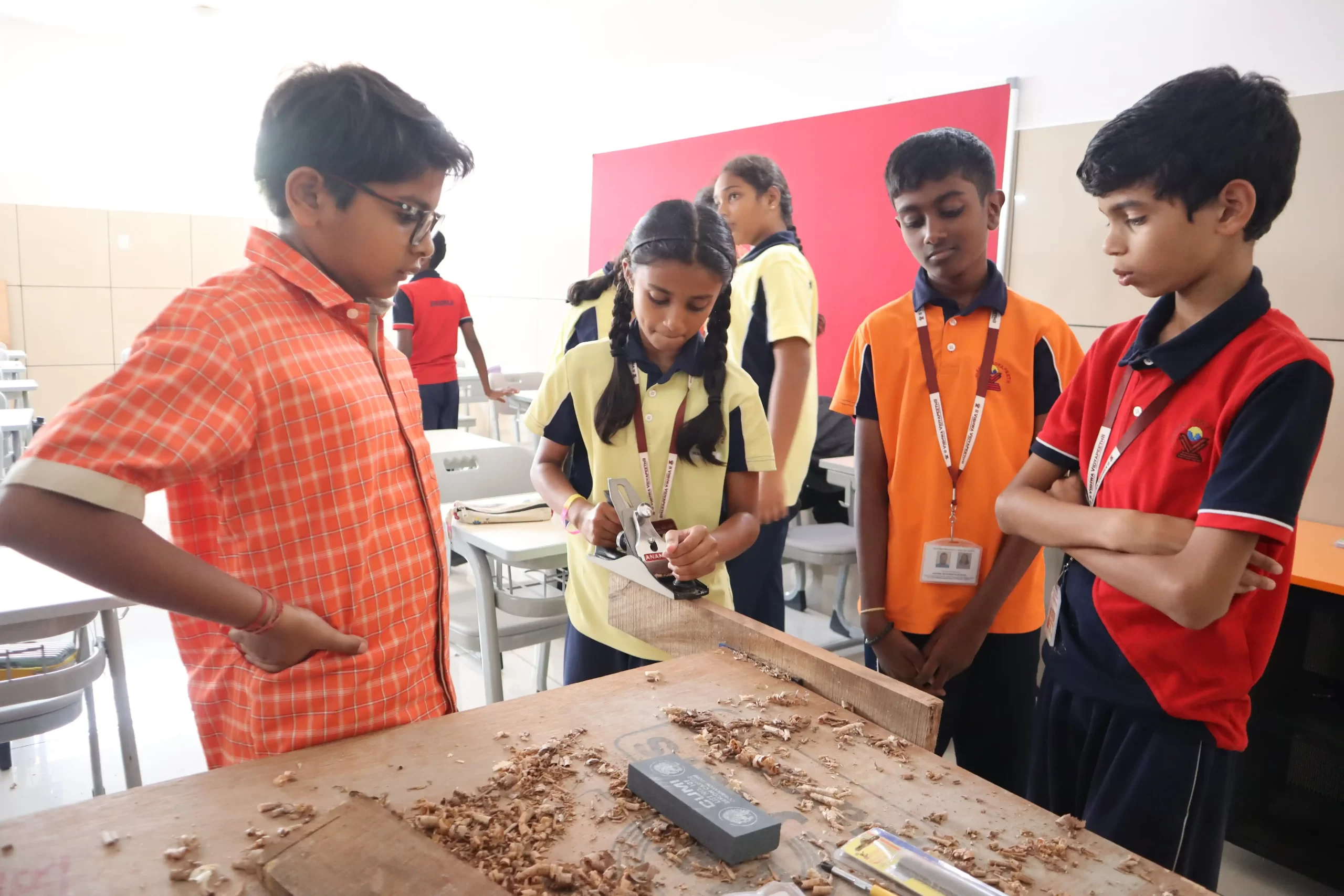
We see woodworking as much more than a hands-on activity-it’s a powerful developmental tool. Engaging in woodworking helps children build both fine and gross motor skills, as well as hand-eye coordination, through purposeful, tactile work.
Beyond physical development, woodworking nurtures social and emotional growth by fostering self-confidence, a sense of responsibility, respect for tools and materials, and appreciation for both individual and group efforts. It also naturally encourages important values like sharing, cooperation, and teamwork.
Unlike passive play, woodworking invites children to engage actively and intentionally. Instead of relying on toys to meet their needs, children learn to create, solve problems, and take initiative, helping them develop a deeper understanding of how to care for themselves and their environment.
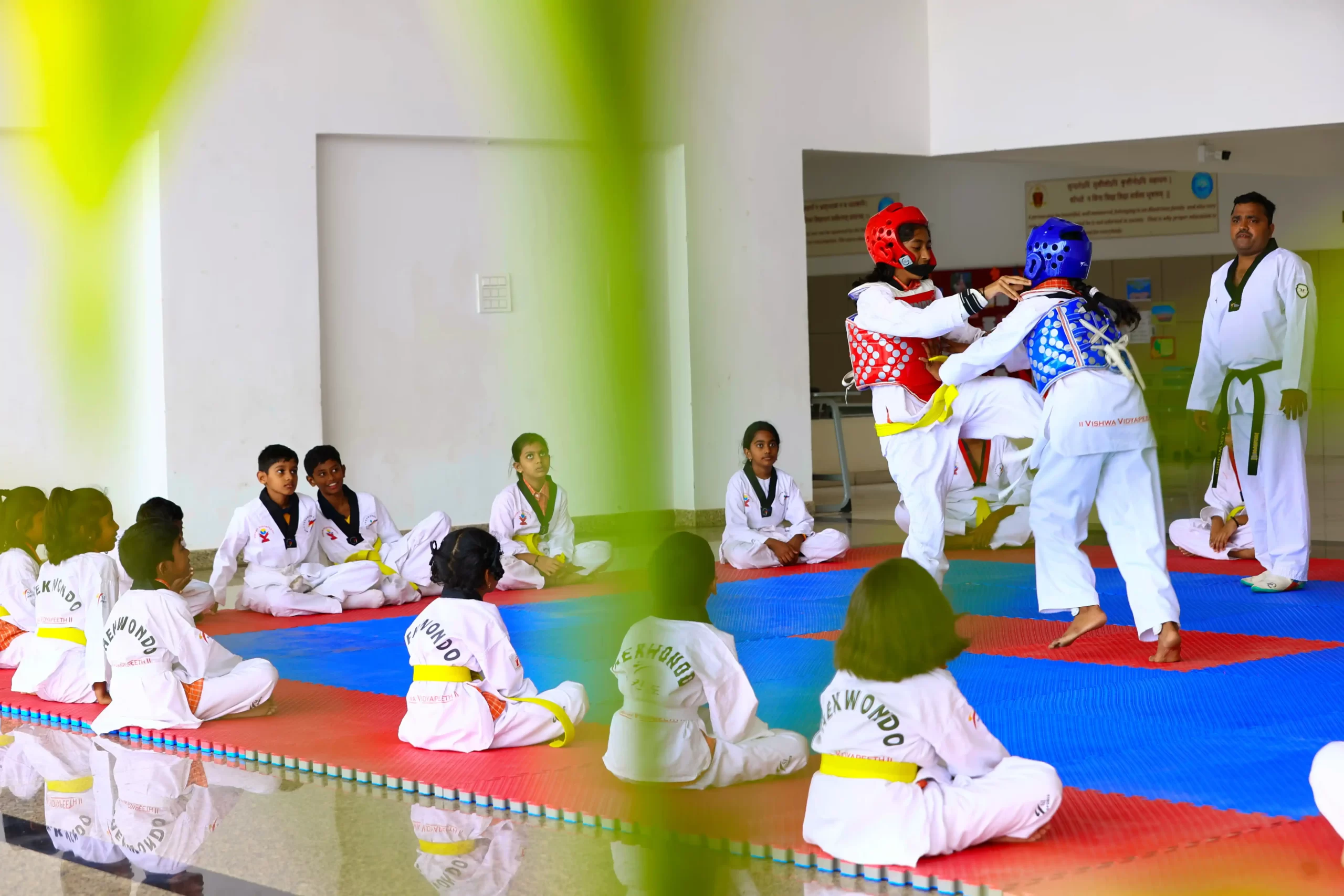
Taekwondo
(आत्मरक्षण कौशल्यम्)
We believe that teaching self-defence equips children with more than just physical skills-it empowers them with confidence, awareness, and discipline. Students who learn self-defence become more attuned to their surroundings and are trained to protect themselves effectively, whether facing threats from peers or adults.
Beyond safety, self-defence instills core life values such as hard work, dedication, perseverance, and respect for others. It also encourages students to build strong personal relationships, rooted in mutual understanding and self-control. These lessons extend far beyond the classroom, positively influencing their everyday interactions and choices.
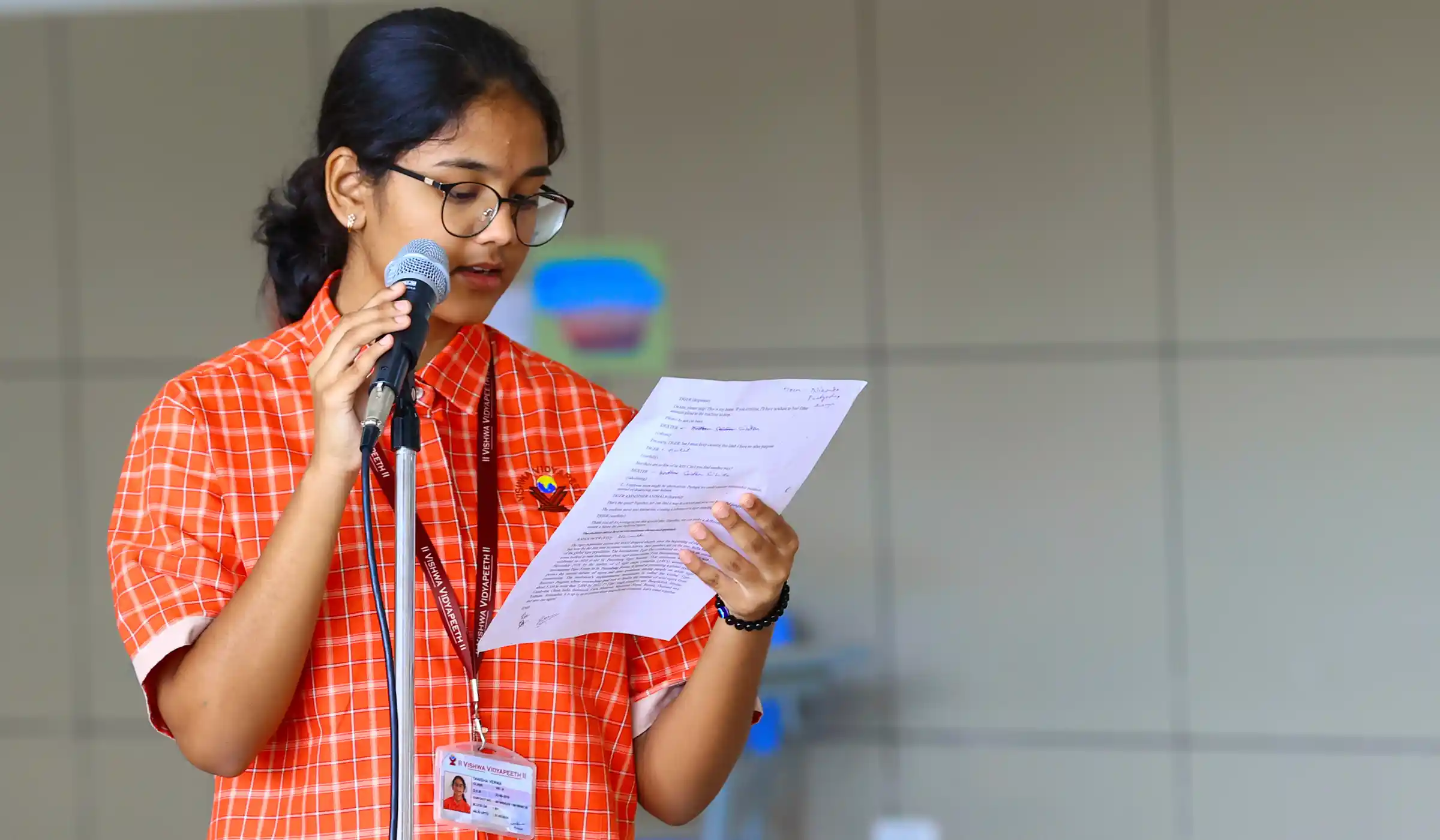
Public Speaking skills
(वाक् कौशल्यम्)
Public speaking can help us teach children persuasive skills which are required for them to convince other people. The development of this skill in children at an early age can not only help them to persuade people but also to have a positive influence on people around them. It helps to improve academic performance, improve listening skills, develop ability to voice their opinions, empower them to overcome their fears and prepares them for a better future.
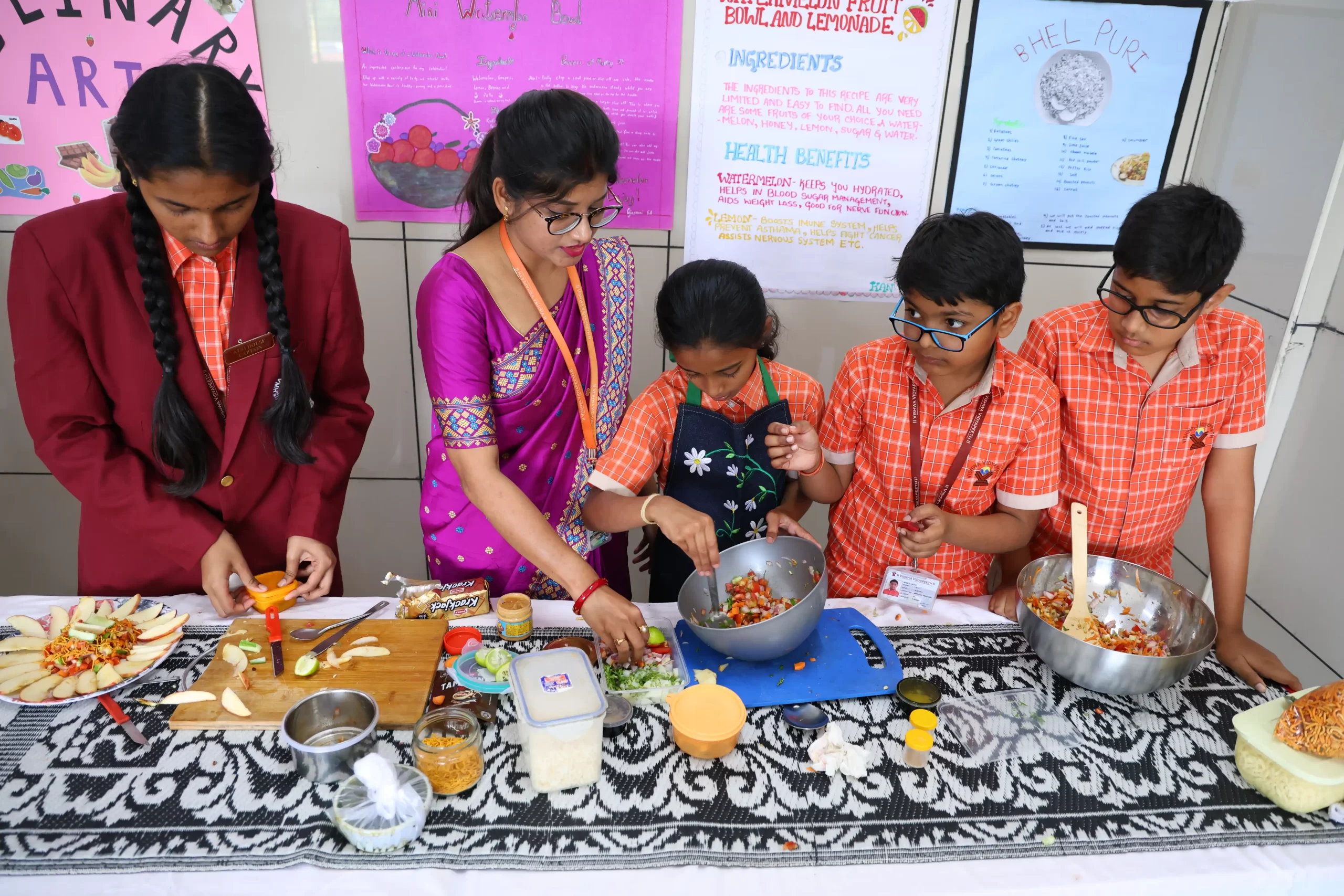
Cooking
(पाक कौशल्यम्)
In a society, where gender is not a barrier any more, it is very important that both boys and girls learn the art of cooking as part of them becoming self-dependent. Learning cooking in our kitchen lab will help children to explore their “shata ruchis” (6 tastes) which includes sweet, sour, chilli, salt, bitter and ghee. Also the simple practices like kneading, smelling, cutting, pouring etc. will help them to learn and have fun side-by-side.
Basic lifetime skills are learnt for example Math skills such as counting, weighing, measuring, tracking time; they also gain social skills by working together and communicating in the kitchen.
Going back home, children who can cook will always show a “sense of accomplishment” apart from being self-confident about their skills. They also develop a feeling of contributing towards their own families.
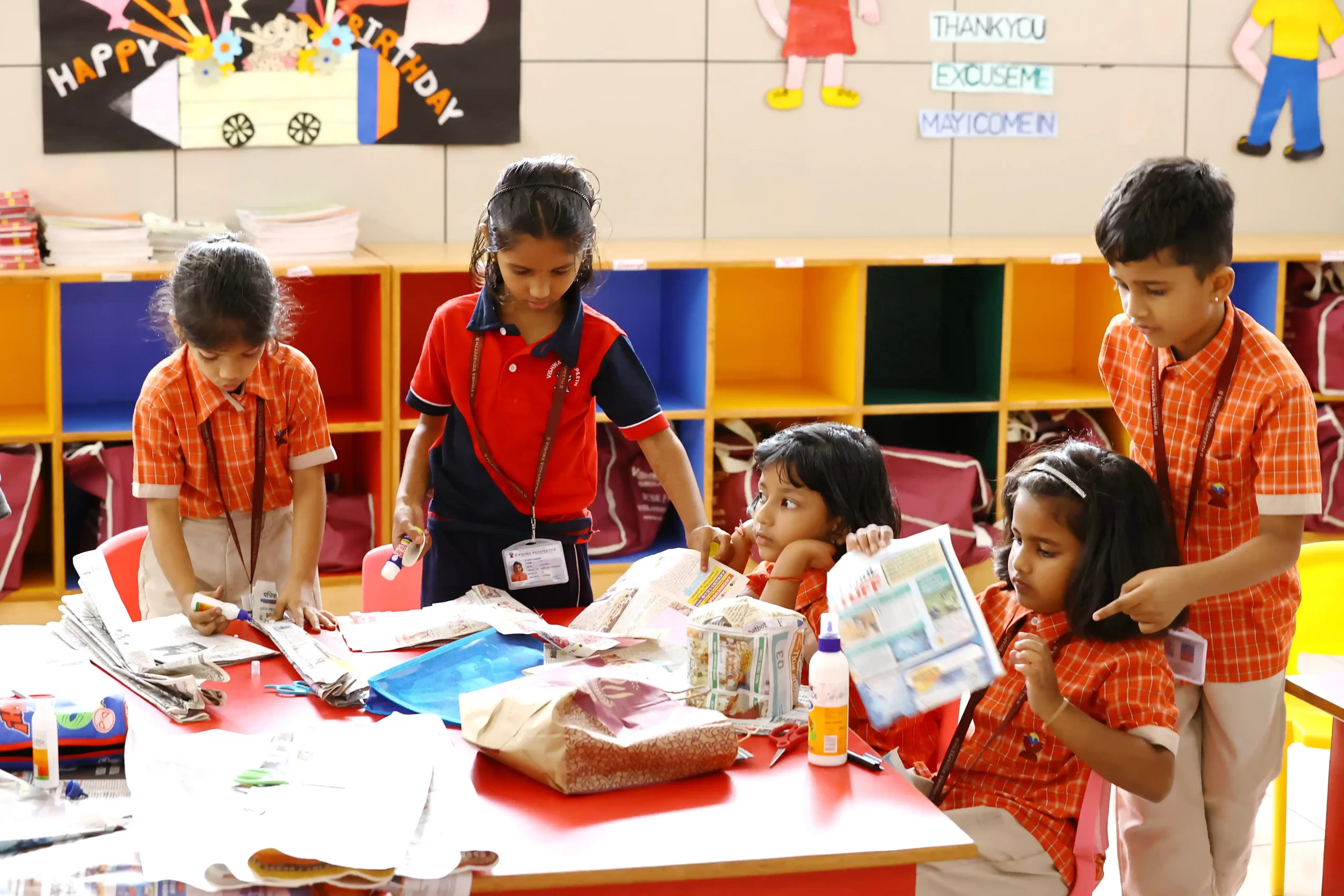
Art Education
(कला कौशल्यम्)
At Vishwa Vidyapeeth, we believe that art and Indian culture are deeply intertwined. While art may seem elusive or mysterious to some, it is, in fact, woven into the fabric of everyday life-bringing depth, fulfillment, and meaning to our experiences.
To nurture this connection, we introduce students to a variety of traditional Indian art forms, such as Warli, Madhubani, and others. Through these artistic practices, children develop their creativity, individuality, and expressive abilities, while also gaining a deeper appreciation of India’s rich cultural heritage.
Our goal is to make these art forms more than just creative exercises-we see them as powerful tools for cultural education, helping children understand and value the traditions that shape our society. By integrating Indian art into the curriculum during the formative years, we aim to ensure that the next generation grows up with both the skills and the sensibility to preserve and celebrate our cultural legacy.
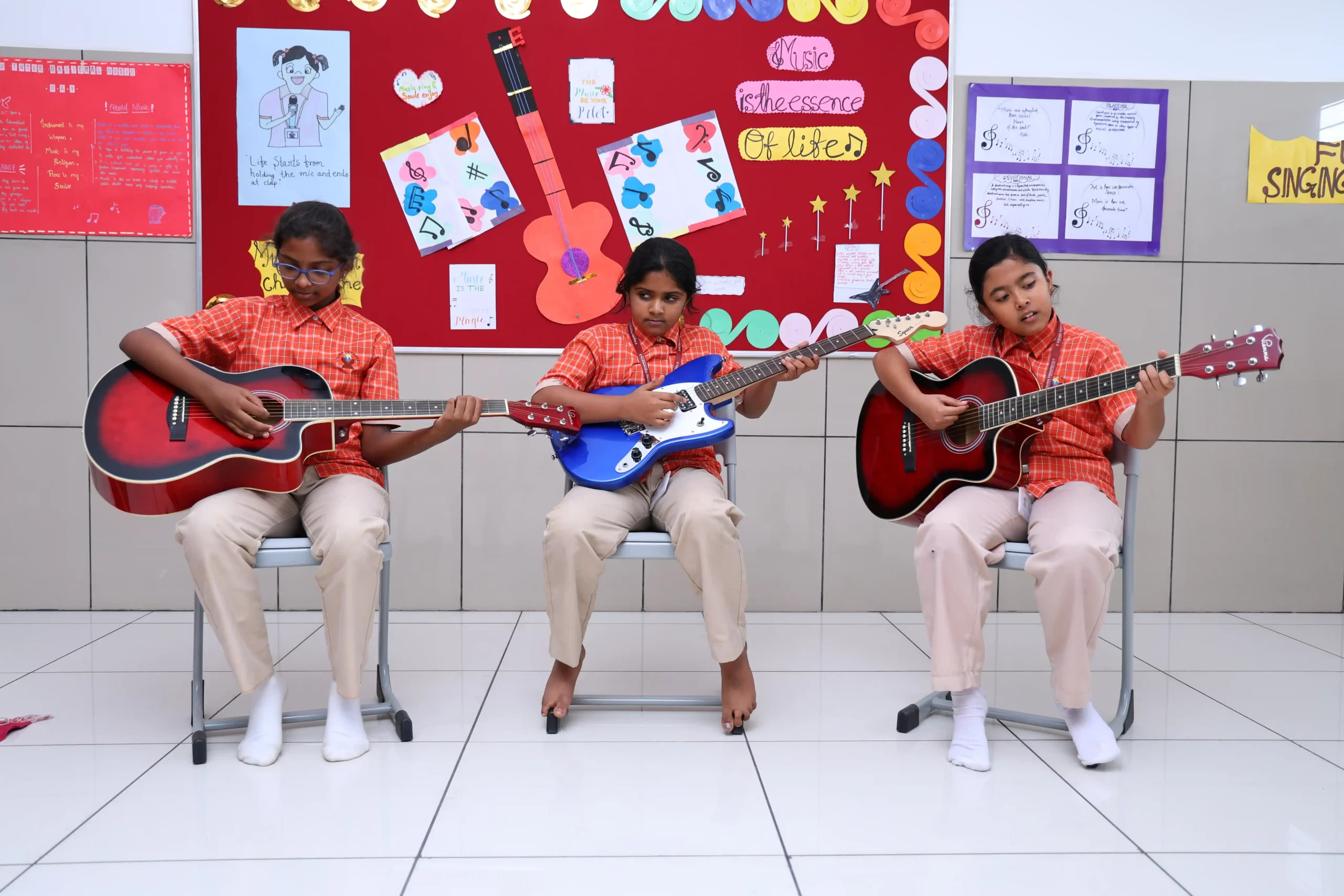
Music
(सङ्गीत कौशल्यम्)
At our school, we recognize music as a cherished part of our cultural heritage and a powerful influence on human well-being. For centuries, music has served as a stress reliever across all age groups and is widely recognized as a form of therapy that promotes health and emotional balance.
Introducing music at the school level allows us to support the holistic development of children. It helps synchronize the mind and body, encouraging coordination, focus, and rhythm. Music education plays a vital role in enhancing various developmental areas, including motor skills, intellectual growth, language acquisition, social-emotional development, and overall literacy. Moreover, music provides a joyful space for self-expression, allowing children to explore their emotions, build confidence, and connect with others. By integrating music into our curriculum, we aim to nurture not just talented musicians, but well-rounded individuals.
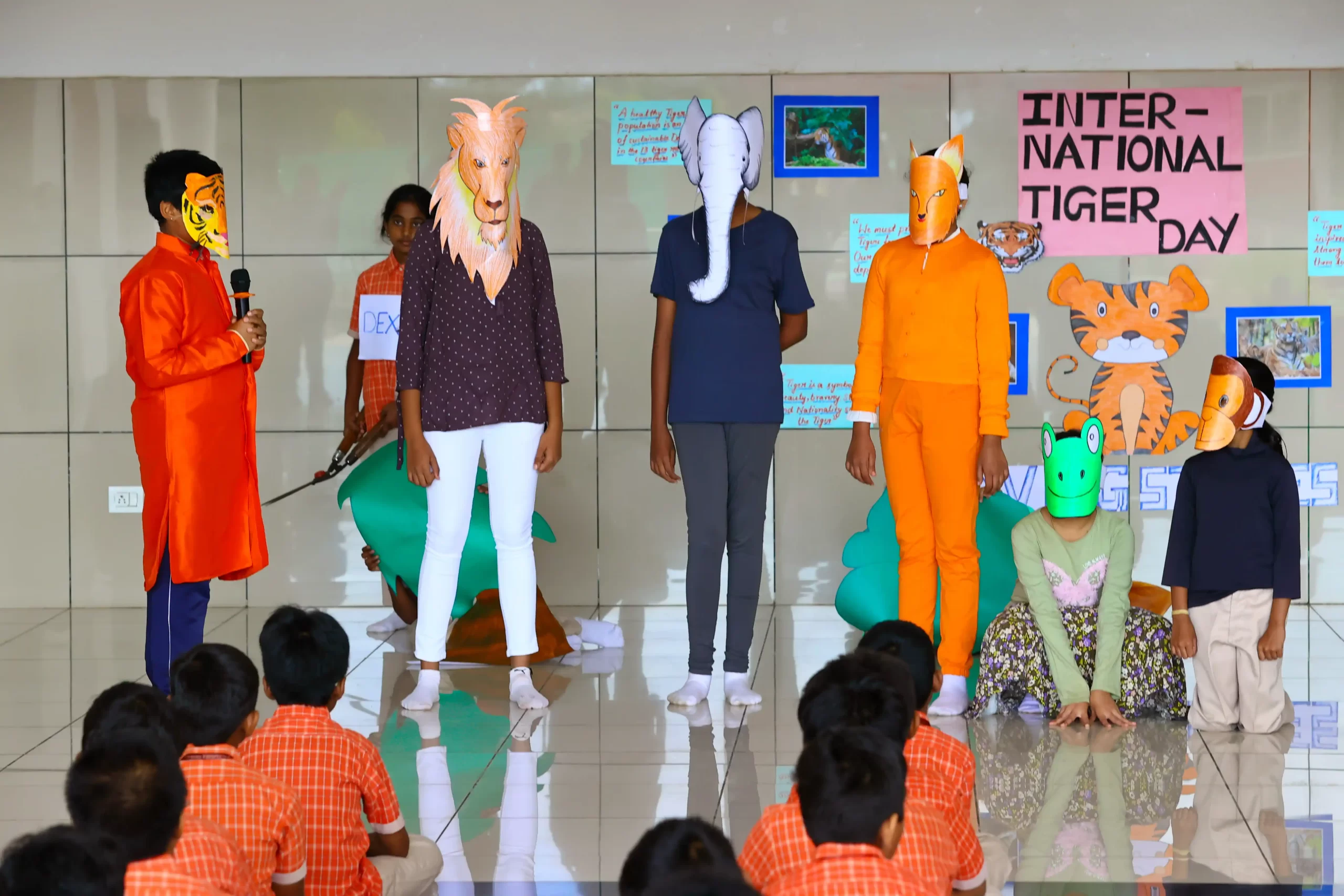
Theatre
(नाठक कौशल्यम्)
At our school, theatre plays a vital role in developing children’s creativity, confidence, and communication skills. Through acting, storytelling, and role-playing, students learn to express themselves, work collaboratively, and understand different perspectives. Theatre also encourages imagination and emotional growth, making it a fun and powerful tool for overall development.